


Chain Link Fence Parts Explained: Components and Uses
Not all chain link fences are built the same, and understanding the difference starts with knowing the essential components that go into one. Chain link fence parts and fittings, such as brace bands, purlin brackets, carriage bolts, and loop caps, vary by grade, gauge, coating, and configuration depending on where you live, what you’re fencing in, and how much work you need that fence to actually do.
If you’re a homeowner in Southern New Hampshire weighing your options, our team has been installing chain link across the region for over 40 years. This guide covers the full range of chain link components and fittings available, what makes each one matter, and why the right spec choices lead to a fence that holds up through decades of New Hampshire winters.
Here’s what you’ll find in this guide:
- The core structural components of any chain link fence
- How grades, gauges, and coatings affect long-term performance and durability
- Bottom rail vs. tension wire and what that means for pets
- Why chain link is a smart choice for large New Hampshire yards, including residential and commercial properties
- How commercial and residential setups differ in components and products

Why the Components You Choose Actually Matter
A chain link fence is only as good as the parts that go into it, and durability is key to a fence that stands the test of time. This is something that gets glossed over by companies competing on price, but it matters a lot over a 10, 15, or 20-year horizon. Cheap fittings corrode. Low-grade coatings peel. Undersized posts flex and lean. And once a fence starts failing at one component, everything around it follows.
This is especially true in New Hampshire, where freeze-thaw cycles, wet springs, and heavy snow loads stress outdoor materials far harder than they would in a milder climate. The component spec that works fine in another part of the country may not hold up through a New Hampshire winter. That’s one reason Crowe Fence & Deck uses more components per installation than a lot of contractors elsewhere, because this climate demands it. We are proud to be the 2025 Fencing Contractor of the Year as recognized by the Greater Merrimack Souhegan Chamber.
It’s part of why we were recognized as the 2025 Fencing Contractor of the Year by the Greater Merrimack Souhegan Chamber, an acknowledgment of the standards we hold ourselves to on every job.
The right chain link build pays off in:
- Longevity: Higher gauge wire, quality coatings, and properly sized posts extend the fence’s useful life significantly. Galvanized steel fittings are commonly used in chain link fences for their durability and resistance to rust, making them suitable for both residential and commercial applications.
- Security: Correct tension, proper bottom treatment, and the right height actually keep things in or out. A loose, sagging fence does neither.
- Appearance: Black vinyl-coated components hold their finish and look sharp for years. Components that aren’t properly spec’d can look rough within a few seasons.
- Pet containment: The details at the bottom of a fence, whether tension wire or a full bottom rail, are what determine whether your dog stays in your yard or your neighbor’s.
- Value: A fence installed with the right components doesn’t need to be rebuilt in five years. That matters when you’re fencing a large property.
Using galvanized steel for fittings and top rails is essential for ensuring rust resistance and long-lasting performance, especially in outdoor environments. Ensuring proper installation and maintenance further protects the integrity and durability of your chain link fence over time.
10 Core Chain Link Fence Parts, Explained
Every chain link fence is built around the same fundamental components, but how those components are configured, graded, and combined changes significantly based on the application. In addition to these core parts, chain link fittings—specialized hardware and accessories used in installation and maintenance—play a crucial role in ensuring proper fence assembly and durability. Here’s what each part does and why it matters.
1. Chain Link Fabric
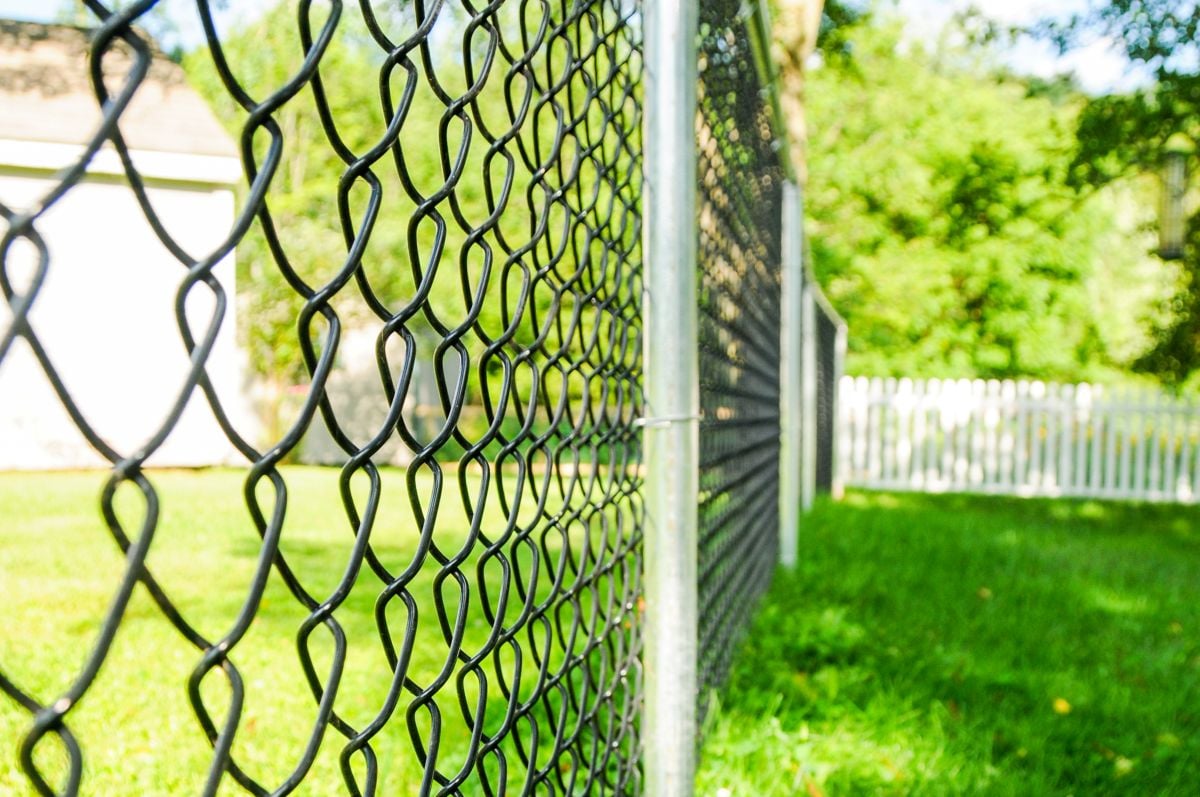
The fabric, also called the mesh, is made of interwoven steel wires that form a diamond pattern, creating the visible barrier of the fence. This chain link fabric is available in various heights, gauges, coatings, and sizes to accommodate different fencing needs. Gauge refers to the thickness of the wire—a lower gauge number means thicker, stronger wire. For residential installations in Nashua, NH and surrounding areas, a 9 or 11 gauge fabric is standard. Commercial applications often call for heavier gauge to withstand higher impact and daily wear.
Coating options include:
- Black vinyl-coated: The most popular choice for residential work. Holds up well aesthetically and provides a layer of corrosion resistance. This is what Crowe Fence uses on most homeowner installations.
- Galvanized: A zinc coating that resists rust. Standard for commercial work, dumpster enclosures, and institutional applications.
- Green vinyl-coated: Less common in residential settings, but used in commercial and institutional work where it blends better into landscaped environments.
2. Line Posts
Line posts are the intermediate vertical posts set at regular intervals along the fence run, typically every 8 to 10 feet. They support the fabric and keep the fence running straight and true. Line posts are smaller in diameter than terminal posts because they carry less structural load. In New Hampshire, post depth matters a lot. Posts that aren’t set below the frost line will heave over multiple winters and eventually cause the fence to shift out of alignment.
3. Terminal Posts
Terminal posts are the heavy-duty posts placed at every corner, end, and gate opening. They are wider in diameter and set deeper than line posts because they carry the full tension load of the stretched fabric. Barb arms can be attached to the top of terminal posts to hold barbed wire, enhancing security. Gate posts are a specific type of terminal post, sized to carry the weight and movement of a gate without flexing or leaning over time.
4. Top Rail
The top rail is the horizontal pipe that runs along the top of the fence, threading through loop caps on each line post and connecting into rail ends at the terminal posts. It stabilizes the top of the fabric and keeps the fence from sagging over its run. Top rail is available in standard residential aluminum or heavier pressed steel for commercial installations.
5. Tension Wire
Tension wire is the heavy gauge wire run horizontally along the bottom of a chain link fence. It threads through the fabric and gets pulled taut between terminal posts, stiffening the bottom of the fence and keeping the mesh tight to the ground.
This is where the details matter a lot for pet owners. A lot of fence companies skip any bottom treatment entirely and just let the fabric hang. That works fine for a property line marker, but it creates an obvious escape route for dogs. A dog with any determination at all can push under loose fabric or squeeze through a gap that develops over time.
At Crowe Fence & Deck, we use tension wire as a standard bottom treatment on most residential chain link installations. It adds meaningful stiffness and keeps the bottom pulled down without the added cost of a full bottom rail.

6. Bottom Rail
A bottom rail is exactly what it sounds like: a full horizontal pipe running along the base of the fence, mirroring the top rail. It costs more than tension wire, but it provides a rigid frame at the bottom that is significantly harder for a determined dog to push through or dig under.
For homeowners in Nashua, NH and surrounding areas who have serious escape artists or need to secure a pool area, a bottom rail is the right call. See our guide to above ground pool safety fencing for more on containment options.You can also add mid rails if you want additional reinforcement at the midpoint of a taller fence. The more rails you add, the more the cost goes up, but for large properties with multiple dogs or real wildlife pressure, the investment makes sense.
7. Tension Bands and Tension Bar
Tension bands are the metal bands that wrap around terminal posts and hold the tension bar in place. The tension bar itself is a flat, vertical metal bar woven through the end of the fabric that distributes the pull evenly across the mesh and holds it against the post. Together, tension bands and tension bar are what keep the fabric pulled taut and anchored at every corner and end.
The number of tension bands on each post corresponds to the height of the fence. A 4-foot fence needs 3 tension bands. A 6-foot fence needs 5. Getting this count right is part of what separates a properly built fence from one that looks loose or sags unevenly within a year.
8. Brace Bands and Rail Ends
Brace bands attach to terminal posts and hold rail ends in place. Rail ends are the fittings that cup the top rail and connect it to the terminal post through the brace band assembly. These components are what keep your top rail anchored at corners, ends, and gates. Commercial installations use pressed steel rail ends rather than aluminum because they handle higher tension loads without deforming.
9. Loop Caps and Post Caps
Loop caps fit over line posts and have a hole through which the top rail threads. They keep the rail at the correct height and angle as it runs along the fence line. Post caps go on terminal posts where no rail passes through, covering the open top of the post to keep water out and prevent interior corrosion over time.
10. Fence Ties and Tension Wire Clips
Fence ties are the small bent wire clips used to attach the fabric to the top rail and line posts at regular intervals, typically every 12 to 24 inches. Tension wire clips, sometimes called hog rings, perform the same function at the tension wire along the bottom. These small components keep the mesh from shifting, sagging, or pulling away from the frame.
How Height and Grade Affect Your Build
One of the most common questions homeowners ask is how tall a chain link fence needs to be. The answer depends entirely on what you’re keeping in or out, and in New Hampshire, that question comes up in a few specific ways.
Residential Height Choices
For most residential property lines and yard enclosures, a 4-foot fence is standard. For dog containment, 4 to 5 feet handles most breeds. For homeowners dealing with deer pressure, the bar is significantly higher. Deer can clear a 6-foot fence without much effort. If wildlife protection is a priority, especially on the larger wooded lots common in Nashua, NH and surrounding areas, going to 7 feet is the right move. It costs more as you go up in height, but the extra footage is what makes the fence actually effective.
Commercial Grade vs. Residential Grade
The commercial and residential distinction shows up in several components at once: heavier gauge fabric, larger diameter posts, pressed steel fittings rather than aluminum, and marcelled tension wire rather than smooth utility wire. Our commercial fencing team installs galvanized commercial-grade chain link on projects like dumpster enclosures, where the fence takes daily abuse from heavy equipment and needs to hold up year after year without maintenance.
Here’s a quick comparison of how the grades differ:
| Component | Residential | Commercial |
| Fabric gauge | 11 gauge | 9 gauge or heavier |
| Post material | Standard steel | Heavy-wall steel |
| Rail ends | Aluminum | Pressed steel |
| Tension wire | Smooth utility wire | Marcelled heavy gauge |
| Typical coating | Black vinyl | Galvanized |
Why Large NH Yards Are a Smart Match for Chain Link
New Hampshire residential lots are often much larger than what you’d see in denser states. A quarter-acre yard in the suburbs is common. Rural properties run several acres. Fencing that kind of acreage in vinyl or wood gets expensive fast.
A common approach we see in Nashua, NH and surrounding areas is pairing materials by zone. Homeowners put a decorative vinyl or wood fence installation along the front of the property where curb appeal matters, then run black vinyl-coated chain link through the wooded back half of the yard where containment is the goal and nobody is looking at it from the street. It’s a smart way to get the look you want out front and the function you need in back without paying premium material prices for every linear foot.

What to Watch for When Evaluating a Chain Link Quote
Not all contractors build the same fence even when they’re quoting the same linear footage. These are the questions worth asking before you commit to anything.
- What gauge is the fabric? A price that seems low often reflects a lighter gauge that won’t hold up as well over time.
- What’s the bottom treatment? No bottom treatment at all is a red flag for any pet-containing application. Ask specifically whether tension wire or a bottom rail is included.
- What grade are the fittings? Aluminum fittings are fine for residential work. For commercial or high-stress applications, pressed steel is the correct spec.
- How deep are the posts being set? In New Hampshire, posts need to go below the frost line, typically 4 feet or more depending on location, to prevent heave.
- What coating is on the fabric and fittings? Mismatched coatings look sloppy and suggest the contractor is cutting corners on material selection.
- Does the contractor stock quality chain link fence parts and hardware? Contractors who stock a full range of fittings and components can fulfill your order efficiently and avoid delays.
- What will the contractor provide and install? Make sure your quote clearly states which parts and services are included, so you know exactly what the contractor will provide and install for your project.
The quality difference between a well-built chain link fence and a cheap one is visible within a few years. Fittings that weren’t properly coated start to rust. Undersized posts flex under snow load. Fabric that was light gauge to begin with starts to look worn. Investing in the right components upfront is the straightforward way to avoid all of that.
Get a Free Chain Link Fence Quote in Southern New Hampshire
Chain link is one of the most practical, cost-effective, and versatile fencing options available, especially for large properties, commercial sites, and pet owners who need real containment. The open design of chain link fencing provides clear sightlines, enhancing visibility and safety while also acting as a deterrent against potential intruders. For homeowners seeking more privacy, chain link fences can be easily enhanced with privacy slats or windscreens to reduce wind flow and create visual seclusion in outdoor spaces. Maintenance is minimal—often just a simple wash with a garden hose keeps your fence looking new, unlike wooden fences that require regular staining or painting. Getting it right means choosing the right grade, the right coating, the right bottom treatment, and the right height for what you’re actually trying to accomplish.
Crowe Fence and Deck has been installing chain link across Southern New Hampshire for over 40 years, with full-time in-house crews and no subcontractors. Whether you need a black vinyl residential run in the backyard, a galvanized commercial enclosure, or a pet-containment setup built for a real escape artist, we will walk you through the right components for your specific situation.
Contact us today for a free quote and find out what a properly built chain link fence looks like for your property.
Frequently Asked Questions About Chain Link Fence Parts
What are the parts of a chain link fence called?
The main parts of a chain link fence are the fabric or mesh, line posts, terminal posts, top rail, tension wire, tension bar, tension bands, brace bands, rail ends, loop caps, post caps, and fence ties. Each component plays a specific role in keeping the fence tensioned, anchored, and structurally sound. Leaving out or cheapening any one of these parts affects the performance of the entire fence.
What are the different types of chain link?
The two most common types are black vinyl-coated and galvanized chain link. Vinyl-coated is the standard choice for residential installations because of its appearance and corrosion resistance. Galvanized is the standard for commercial, institutional, and high-traffic applications where raw durability matters more than aesthetics.
How many years does a chain link fence last?
A properly installed chain link fence lasts 20 years or more. Lifespan depends on the quality of the coating, the gauge of the fabric, and how well the posts were set. In Southern New Hampshire, where freeze-thaw cycles and heavy snow loads stress outdoor materials, choosing the right components from the start is what determines whether your fence lasts two decades or needs to be rebuilt in ten years.
What is the most durable chain link fence?
The most durable option is heavy gauge galvanized chain link with commercial-grade pressed steel fittings and posts set below the frost line. For residential use, 9-gauge black vinyl-coated fabric with properly sized terminal posts offers the best combination of strength and appearance. For commercial applications, fully galvanized heavy-wall construction with marcelled tension wire is the correct spec.

Discover Our Built-To-Last Fence Solutions
Start Your Project!
"*" indicates required fields