


6 Wrought Iron Fence Installation Upgrades For Your Property
If you have been searching for wrought iron fence installation options, there is something important worth knowing before you go further: true wrought iron is rarely the right answer for most homeowners today, and in New Hampshire it almost never makes practical sense. The look you are after, that classic ornamental style with pointed pickets, elegant finials, and timeless curb appeal, is absolutely achievable. Our team installs it regularly across Southern New Hampshire. It just does not need to be wrought iron to look that way. In fact, a metal fence—whether made from iron, steel, or aluminum—offers significant advantages such as durability and low maintenance, especially when compared to wood. Unlike wood, a metal fence will not rot or warp, ensuring long-lasting beauty and security for your property. Here is what you actually need to know.
Here is what you will find in this guide:
- Why true wrought iron is rarely the right choice for residential properties in 2026
- What ornamental aluminum and steel offer instead, and why they outperform iron
- Where wrought iron still makes sense, and where it does not
- How to think about upgrades, railings, and decorative applications
- What the honest cost difference looks like

The Truth About Wrought Iron in 2026
Most homeowners searching for wrought iron fencing are really searching for the look of wrought iron, not the material itself. That distinction matters more than people realize, and understanding it will save you real money and a lot of future maintenance headaches.
Authentic wrought iron has to be produced and fabricated by skilled craftsmen. Real custom wrought iron fencing is extraordinarily expensive, with projects running well into the tens of thousands of dollars for even modest residential applications. A custom wrought iron gate alone can reach $150,000 on high-end estates. The material is also exceptionally heavy, requires specialized installation, and because it is iron, it rusts. Without regular maintenance, that investment deteriorates visibly within a few years. Wrought iron is also a sustainable choice, as it is frequently made from recycled materials and can be fully recycled or repurposed at the end of its life.
When considering alternatives to wrought iron, the choice of materials—such as iron, steel, or aluminum—directly impacts durability, maintenance needs, and overall performance in different environments.
Here is why most homeowners are better served by the modern alternatives:
- Cost: Wrought iron typically costs 20 to 40 percent more than aluminum upfront, and that gap widens dramatically when you factor in 20 years of maintenance.
- Rust resistance: Aluminum does not rust. It does not corrode in humidity, rain, or pool splash. It forms a natural oxide layer that protects it, the opposite of iron, where rust is porous and accelerates further breakdown.
- Weight and installation: A section of wrought iron fence can weigh 50 pounds or more. That weight makes installation labor-intensive and expensive. Aluminum and tube steel are far lighter and faster to work with.
- Powder coating durability: Modern aluminum and steel fences use powder-coated finishes that outlast painted iron surfaces. There is no scraping, sanding, and repainting every few years to prevent rust.
- Visual parity: From any normal viewing distance, well-made ornamental aluminum looks nearly identical to iron. Most people cannot tell the difference from a sidewalk or a driveway.
- Maintenance and longevity: Compared to wood fences, which tend to rot, warp, and require more upkeep—especially in harsh weather—metal fencing options like wrought iron, steel, and aluminum offer superior durability and lower maintenance over time.
6 Ornamental Fence Upgrades That Deliver the Wrought Iron Look
If you are upgrading your property with an ornamental fence or railing, keep in mind that selecting the right option involves considering several factors such as purpose, style, and installation difficulty. Here are the configurations and options that deliver the aesthetic you are looking for without the cost and maintenance burden of true iron. Wrought iron fences and their alternatives can also be customized in height, thickness, and finish, allowing homeowners to create a unique look that complements their property.
1. Black Powder-Coated Ornamental Aluminum
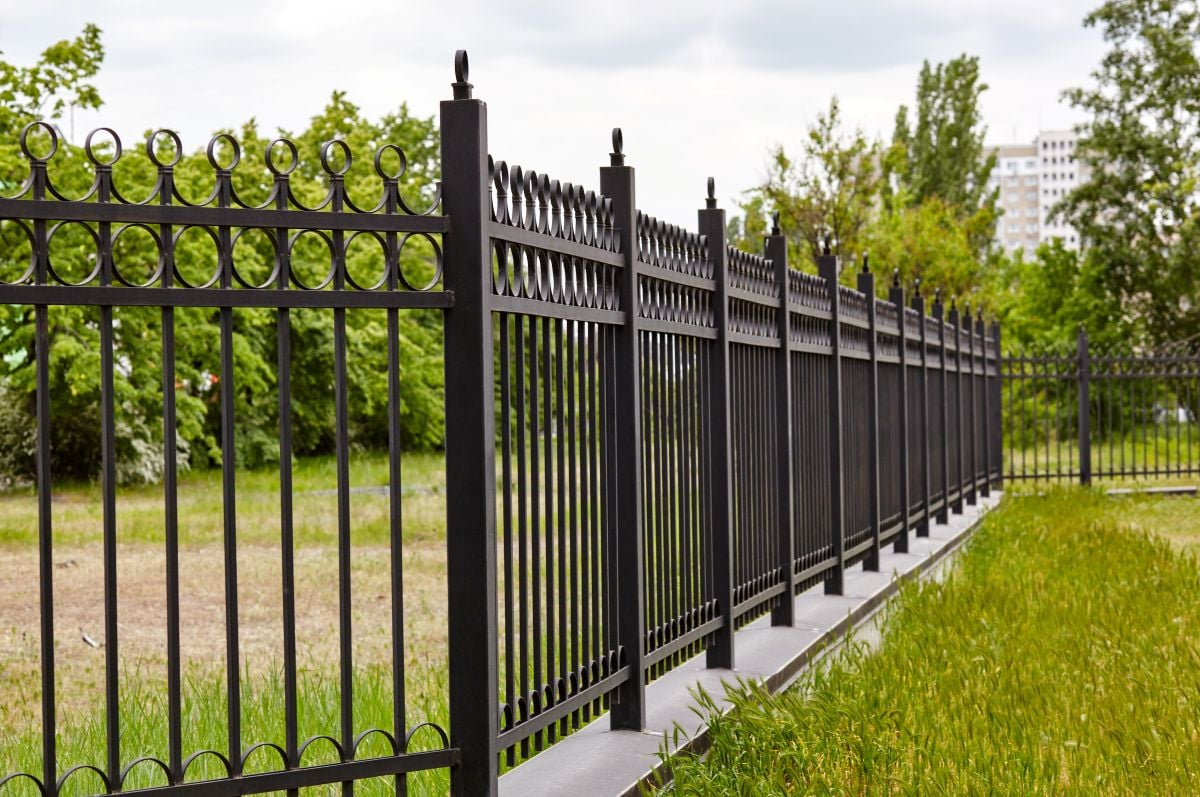
This is the starting point for most residential ornamental fence projects in Bedford, NH and surrounding areas, and for good reason. Ornamental aluminum panels in a classic flat-top or spear-top style, finished in matte or semi-gloss black, deliver exactly the look that most homeowners associate with wrought iron. Modern ornamental aluminum fences also offer clean lines and minimalist aesthetics, enhancing the overall aesthetic appeal and making them suitable for contemporary homes. The panels are manufactured with hollow aluminum extrusions, making them far lighter than solid iron while still providing real structural integrity. Wrought iron fences and their alternatives are available in various styles, including those with clean lines for modern architecture.
Why aluminum leads for most residential projects:
- Rust-proof even through New Hampshire winters, wet springs, and humid summers
- Powder-coated finish holds up for decades without chipping, peeling, or fading
- Available in multiple heights, from 36 inches for decorative borders up to 72 inches for security applications
- Rackable panels that follow grade changes without awkward stair-stepping
2. Tube Steel Fencing
For homeowners who want something heavier-duty than aluminum but are not willing to pay the premium for true wrought iron, tube steel is a type of metal fence that serves as the middle ground worth knowing about. Tube steel uses hollow but heavy-gauge steel construction, powder-coated for corrosion resistance, and produces a metal fence that is noticeably heavier and more rigid than aluminum while remaining far more affordable than custom iron work. Its durability and strength make it especially suitable for demanding environments.
Steel’s additional strength makes it the preferred choice for:
- Commercial sites and property perimeters in Bedford, NH and surrounding areas where impact resistance matters
- Dumpster and equipment enclosures that take daily abuse from heavy machinery
- Security-focused applications where a more substantial barrier is needed
- Institutional and government building perimeters where steel railings are specified
3. Decorative Gate Upgrades
The gate is often the first thing a visitor sees and the element that most strongly signals the quality of a property’s fencing. For a good fence, it is essential to build gates that match the fence style, ensuring a unified look that enhances both security and curb appeal. Proper gate installation is crucial for security and functionality, as it ensures the gate operates smoothly and provides reliable access control.
Hardware matters here. Well-built ornamental gates should include self-closing hinges, heavy-duty fork latches, and hardware rated for the gate weight and use frequency. A gate that sags, sticks, or requires constant adjustment undermines the entire investment.
When planning access points, consider the number and placement of gates for convenient property entry and exit. For decorative entry gates in Bedford, NH and surrounding areas, some of the most compelling designs include:
- Arched double gates flanked by tall decorative posts with ball caps or finials
- Single pedestrian gates with spear-top pickets and a contrasting post height
- Driveway gates with custom panel inserts that mimic the scrollwork of historic iron without the price or maintenance

4. Ornamental Railing Applications
Railings are one of the most common applications where homeowners search for wrought iron and find that aluminum or steel serves them significantly better. Government buildings, historic properties, and institutional structures often feature the heavy iron railings down grand front steps that many people associate with the material. In 2026, those same applications are almost universally filled with steel or aluminum.
When designing ornamental railings, incorporating decorative elements such as finials, scrolls, or collars can greatly enhance the visual appeal and uniqueness of the installation, allowing the railing to complement the home’s architecture and add character.
Ornamental aluminum railing is ideal for:
- Deck perimeters where a traditional ornamental look is desired without adding deck load
- Front porch steps and landings where visual elegance matters
- Commercial building entries where code-compliant railing is required
Tube steel railing is the better choice when:
- The application sees heavy daily traffic from the public
- The railing is on a large institutional staircase where mass and solidity are part of the design intent
- A contractor or architect has specified steel for structural reasons
5. Mixed Material Designs
Some of the most visually striking ornamental fence projects use aluminum or steel panels combined with masonry or stone pillars. This approach allows for the creation of a custom fence that complements the property’s architecture and existing features, as the structural anchoring work can be done in concrete, brick, or stone, while the fence panels fill the spans between pillars. The combination delivers the look of an estate-quality installation at a cost that pencils out for residential budgets.
This is a particularly popular approach on properties in Bedford, NH and surrounding areas with existing stone walls or masonry features, where continuing that material vocabulary into the fence design creates real design continuity.
6. Custom Finial and Cap Details
The small details are what elevate a standard ornamental fence into something that genuinely reads as premium. Post caps in ball, flat, or acorn profiles, spear-tip or fleur-de-lis finials on picket tops, and decorative collars at rail connections are all available on quality aluminum systems. These details are what most homeowners are actually noticing when they admire a fence they think is wrought iron. The ornament is the same. The material underneath is just lighter, less expensive, and more durable.
Where Wrought Iron Still Makes Sense
It is worth being direct about the use cases where true wrought iron or custom steel fabrication genuinely makes sense, because they do exist. Property owners who prioritize both security and visual appeal may still opt for true wrought iron, as wrought iron fences provide a high level of security while maintaining an attractive appearance, making them a popular choice for property owners in certain contexts. They are just not the typical residential backyard in New Hampshire.
Historic Properties
If you have a Victorian, Federal, or late 19th-century home where architectural authenticity matters, true wrought iron or custom-fabricated steel that matches the original detailing may be the right call. Historic preservation standards sometimes require material authenticity, and on a house with that level of character and value, the premium is often justified. In fact, installing a wrought iron fence can add significant value to your property, as these fences can increase property value by up to 20% due to their prestigious appearance and strength.
Cemetery Fencing
New Hampshire has some of the oldest cemeteries in the country, and the heavy iron fencing common to 19th-century burial grounds is a genuine historic element. When those fences are being restored or replaced, matching the original aesthetic and mass sometimes requires steel fabrication rather than aluminum. Even here, tube steel with custom fabrication replaces iron more often than actual wrought iron does, because it performs better over time.
High-Security Commercial Applications
True iron or heavy fabricated steel is occasionally specified for applications where maximum physical resistance to forced entry is the primary design goal. Banks, detention facilities, and certain industrial perimeters fall into this category. These are not residential projects and should not drive the decision-making for a homeowner adding an ornamental fence to a front yard.
How the Cost Comparison Actually Breaks Down
For homeowners trying to budget an ornamental fence project, understanding wrought iron fence cost is essential. The total expense varies based on factors such as fence height, style, the number of fence sections, and the type of wrought iron fence panels selected. Actual pricing depends on linear footage, height, design details, and site conditions specific to your property.
The national average cost for installing a wrought iron fence is approximately $3,360, with a typical range between $1,420 and $17,000, depending on length, fence height, and style. Labor costs for installation can range from $1,000 to $4,500, or between $30 and $80 per hour, influenced by regional labor rates and site accessibility. Permit costs typically range from $20 to $400, and a land survey, if required, can add $330 to $670 to the total project cost.
| Material | Cost Per Linear Foot | Maintenance | Rust Risk | Lifespan |
| True wrought iron | $28 to $35+ installed | High (annual inspection, repainting) | Yes | 20 to 30 years with maintenance |
| Tube steel | $20 to $30 installed | Low (inspect coating annually) | Low with coating | 25 to 40 years |
| Ornamental aluminum | $20 to $35 installed | Very low (rinse as needed) | None | 30 to 50+ years |
The long-term cost difference is significant. When you factor in 20 years of maintenance, aluminum costs half or less of what wrought iron costs over its lifetime, according to industry comparisons. For most Southern NH homeowners, the practical choice is clear.
Crowe Fence & Deck can walk you through the exact options and pricing for your specific project at our Amherst showroom, where you can see material samples in person and compare the differences firsthand.

Get the Look You Want Without Overpaying for It
Installing a new fence can enhance your property value and security. The ornamental fence look that most homeowners associate with wrought iron is completely achievable with aluminum and steel at a fraction of the cost and with the added benefit of being low maintenance. Customers prefer low maintenance fencing options like aluminum and steel, as these materials require much less upkeep compared to traditional iron or wood. Whether you are upgrading a front yard fence, adding decorative railing to your porch steps, or enclosing a commercial property with something that looks substantial and polished, the right material choice makes all the difference.
Crowe Fence & Deck has been helping homeowners and commercial clients across Southern New Hampshire make these decisions for over 40 years. Our full-time in-house crews handle every project without subcontractors, and we are proud to be the 2025 Fencing Contractor of the Year as recognized by the Greater Merrimack Souhegan Chamber. We install ornamental aluminum and steel fencing across Bedford, NH and surrounding areas, and we will tell you straight whether the premium is worth it for your specific project.
Contact us today for a free quote and let us show you what the right ornamental fence looks like for your property and your budget. With professional installation, you can rest easy knowing your fence is both durable and attractive.

Discover Our Built-To-Last Fence Solutions
Start Your Project!
"*" indicates required fields