


Vinyl Horse Fencing: 7 Ways To Keep Your Horses Safe
If you own horses in Southern New Hampshire, your fence is one of the most important decisions you’ll make for your animals. Vinyl horse fencing has become the go-to choice for equestrian properties across the region, and for good reason: it combines genuine safety advantages with long-term durability that traditional wood and wire simply can’t match. Whether you’re setting up a new paddock or replacing aging rails, understanding your options can mean the difference between a fence that works and one that causes a trip to the vet. If you’re ready to explore your fencing options, our team can walk you through everything during a free on-site consultation.
What you’ll learn in this post:
- Why the material you choose directly affects your horse’s safety
- The 7 most important ways vinyl horse fencing protects your animals
- How vinyl compares to wood, wire, and other common equine fencing options
- What to look for in rail count, height, and installation quality
- How gate customization gives your equestrian property a finished, personal look
- What “set it and forget it” really means for vinyl horse fence maintenance
- How New Hampshire weather conditions factor into your fencing decision

Why Your Fencing Choice Is a Safety Decision, Not Just an Aesthetic One
Horse owners often think of fencing as a property boundary. The reality is that it functions more like a safety system. Horses interact with their fencing every single day: they lean on it, graze along it, scratch against posts, and occasionally panic into it when something spooks them. A fence that isn’t engineered for those realities puts your animals at risk.
In Amherst, NH and surrounding areas, the combination of rocky soil, wooded lot lines, and harsh winters adds another layer of complexity. You need a fence that handles ground movement, moisture, and temperature swings without degrading, loosening, or exposing hazards over time.
Here’s what sets vinyl horse fencing apart across four core categories:
- Safety engineering: No exposed nails, no splintering, no rust, no sharp wire ends
- Year-round durability: Weatherproof and resistant to rot, decay, and insect infestation, with built-in UV inhibitors that prevent fading and color degradation over time
- Low maintenance demand: No painting, staining, or sealing required; cleaning is as simple as a rinse with a garden hose, or a mild soap solution for tougher stains
- Long-term cost efficiency: Vinyl typically runs $15 to $40 or more per linear foot depending on style, which is higher upfront than wood or wire, but its 20 to 30-year lifespan compared to wood’s 10 to 20 years means significantly lower lifetime cost
Choosing the right fence means thinking past installation day. A well-built vinyl horse fence should look and perform just as well in year 15 as it does on day one.
7 Ways Vinyl Horse Fencing Keeps Your Horses Safer
Vinyl isn’t the only equestrian fencing option, but it earns its place at the top of the list for a reason. Here are the seven most meaningful ways it protects your horses.
1. No Sharp Edges or Exposed Hardware
Traditional wood fencing gets nails, screws, and staples over time. Wire fencing develops rust, frayed ends, and points that catch skin and hooves. Vinyl fencing has none of those failure modes. The smooth rail surface presents no snagging points, which matters most when a horse is moving fast or brushing the fence line. A horse that grazes along a vinyl rail walks away without a scratch.
2. Engineered Flexibility Under Impact
One of vinyl’s most underrated safety qualities is how it responds to impact. Vinyl horse fence rails are approximately four times more flexible than wood. When a horse leans or kicks into a vinyl rail, that rail flexes and absorbs force rather than snapping rigidly. High-quality horse-grade vinyl incorporates impact modifiers specifically designed to handle that kind of stress, and if a rail does break, it tends to break cleanly at one point rather than splintering into jagged shards. One important note: standard residential-grade vinyl is not the same as horse-grade vinyl. For horse enclosures, always specify heavy-duty, horse-grade material with interior galvanized steel or aluminum inserts, which prevent sagging and add structural rigidity that standard PVC alone doesn’t provide.
3. High Visibility for Horses
Horses have a natural tendency to test boundaries, but they’re also far more likely to respect a fence they can actually see. Vinyl fencing offers excellent visibility from a distance, which helps horses recognize the boundary before they’re up against it. Classic white is the most popular choice for a reason: it reads clearly against any landscape and gives an equestrian property that clean, timeless look. That said, vinyl is also available in colors like black and tan, which can complement different architectural styles and lot settings. Whatever color you choose, UV stabilizers built into the material keep it looking consistent year after year without painting or staining.

4. Reduced Cribbing Risk and Chew Considerations
Cribbing is a compulsive behavior where horses latch onto a solid surface with their teeth and pull. It’s damaging to their dental health and a persistent problem with wood fencing. PVC is less appealing to horses than wood, which reduces the behavior. That said, vinyl is not chew-proof, and horses that are persistent chewers can damage rails over time. For those properties, many equestrian installers recommend pairing vinyl rail fencing with a strand of electric wire along the inside of the fence line, which discourages leaning and chewing without affecting the look or safety of the fence.
5. Structural Integrity Through New England Winters
New Hampshire winters put every material through its paces. Wood absorbs moisture and cycles through freeze, thaw, and expansion. Posts heave. Boards warp. Paint cracks and peels, leaving raw wood exposed to rot. Horse-grade vinyl doesn’t absorb moisture, doesn’t rot, and holds its structural shape through repeated freeze-thaw cycles. It’s worth noting that standard PVC can become more brittle in extreme cold, which is another reason horse-grade vinyl with impact modifiers matters here: it’s formulated to handle temperature swings rather than just endure them. For horse owners in Amherst and surrounding areas, a properly specified vinyl fence means the winter-to-spring transition doesn’t turn into a fence repair project every year.
6. No Toxic Treatments or Chemical Leaching
Pressure-treated wood used in fence posts and boards contains preservatives that can be harmful if horses chew on them over time. Vinyl fencing contains no chemical treatments and does not leach anything into the surrounding soil. It’s non-toxic, requires no added compounds to maintain its integrity, and holds up without any finish degrading into something your horses could ingest.
7. Proper Rail Configuration Keeps Animals Contained
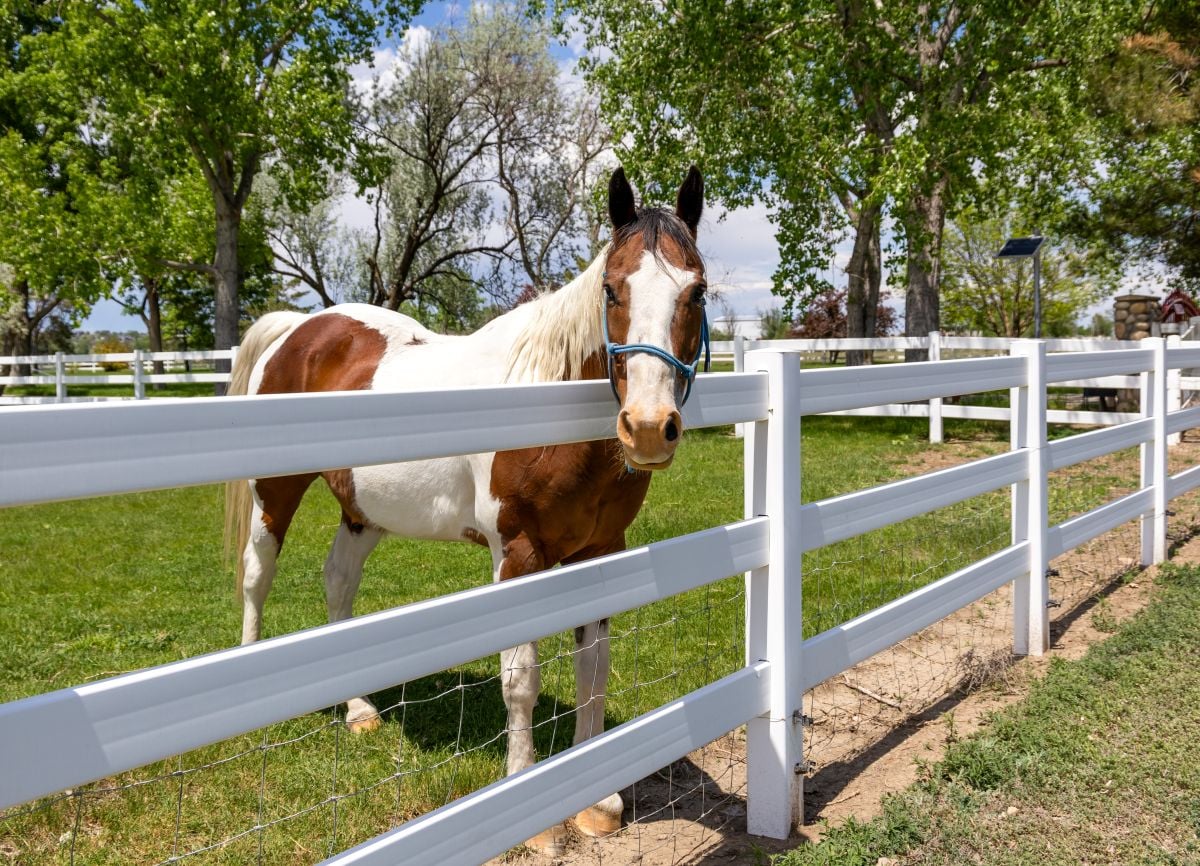
A safe vinyl horse fence is also a well-designed one. For most active paddocks, a three or four-rail configuration is the standard, with fence height between 54 and 60 inches above ground. That height and rail density create a clear visual and physical boundary that discourages jumping while keeping horses safely contained. The right configuration from the start means your fence works as intended from day one, not just in theory.
Vinyl vs. Other Common Equine Fencing Materials
It helps to know how vinyl stacks up against the alternatives most horse owners in Southern NH are weighing.
Vinyl vs. Wood Post and Rail
Wood post and rail is the traditional look that most people picture when they think of horse fencing. It performs reasonably well but requires consistent maintenance: staining or painting every few years, checking for rot and insect damage, replacing boards that crack or splinter, and monitoring posts for heaving after a hard winter. Wood fencing typically lasts 10 to 20 years with regular upkeep, while a properly installed vinyl fence is engineered to last 20 to 30 years or longer with minimal intervention. In New Hampshire’s climate, that gap in lifespan and maintenance demand adds up quickly. Vinyl gives you the same classic rail aesthetic without the ongoing cost and effort.
Vinyl vs. Wire Fencing
Wire fencing, including barbed wire and high-tensile options, remains common on large properties. It’s cost-effective for perimeter coverage of open acreage, but Virginia Tech research found that metallic wire and non-forgiving fence materials caused 63% of all horse fence injuries, with 33 to 60% of those injuries severe enough to require veterinary care. For paddocks, smaller enclosures, and any area where horses move actively, vinyl is the significantly safer choice.
Vinyl vs. Aluminum or Chain Link
Aluminum and chain link have their place in residential and commercial fencing, but neither is ideal for horse enclosures. Aluminum can bend under impact and doesn’t provide the smooth continuous rail surface that horses need. Chain link presents spacing hazards where hooves or legs can get trapped. Neither option was engineered for equestrian use. Vinyl rail fencing, particularly the 3 or 4-rail HDPE system that many horse farms in Amherst, Hollis, and surrounding areas rely on, is purpose-built for the job.
What to Look for in a Vinyl Horse Fence Installation
A good fence starts with the right materials, but the installation is just as important. Here are the factors that separate a well-built equine fence from one that causes problems down the road.
- Post depth and spacing: Posts need to be set deep enough to handle ground movement over multiple freeze-thaw cycles. In New Hampshire, frost depth is a real factor, and shallow posts will shift and lean over time. Standard post spacing for vinyl horse fencing runs 6 to 10 feet depending on rail length, fence height, and wind load.
- Rail inserts, tension, and expansion allowance: Vinyl expands and contracts with temperature changes, so professional installation accounts for proper spacing to prevent warping or rail pop-out. Horse-grade rails should include galvanized steel or aluminum inserts, which prevent sagging and add the structural strength hollow PVC alone doesn’t offer. DIY vinyl fence kits are available with pre-routed posts and pre-cut rails, but getting expansion gaps, insert positioning, and post depth right in New Hampshire’s soil and climate is where professional installation earns its cost.
- Height and rail count matched to the animals: Larger horses and more active animals need taller fences with more rails. A 54 to 60-inch height with four rails is a solid baseline for most paddock situations.
Working with a team that understands equestrian properties makes all the difference. Crowe Fence has been serving horse owners in Amherst, Hollis, and surrounding areas for over 40 years, and our full-time in-house crews, not subcontractors, handle every installation with the same attention to detail.
The Part Most People Don’t Think About: Gate Customization
Most horse owners have already made up their minds on material by the time they call us. They know whether they want vinyl or wood, and they’ve thought through rail count and height. What they almost never consider is the gate, and that’s where a lot of the visual personality of an equestrian fence actually lives.
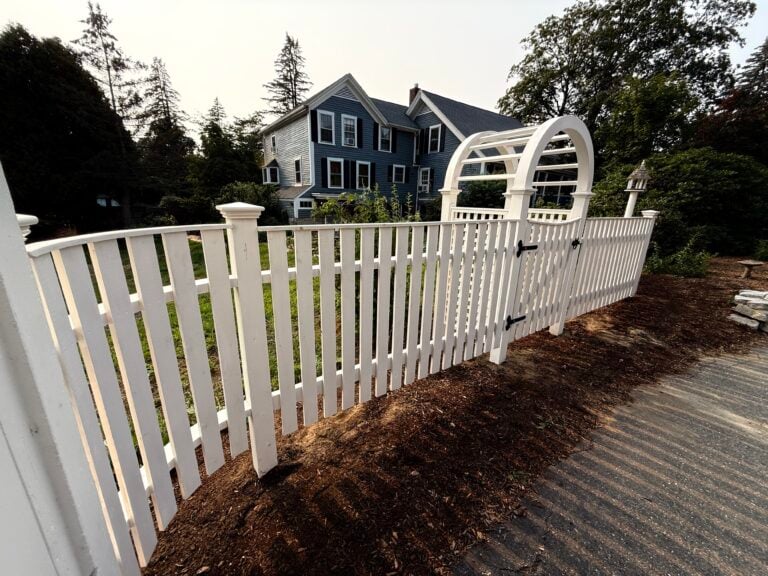
Everything else about horse fencing is about safety and standardization. The gate is where you can make it your own. Color choice is a starting point: classic white is the most popular for equestrian properties, but black and tan options are increasingly common and work well against wooded lot lines or darker architectural finishes. Hardware choices take it further. Heavy-duty decorative hinges, hand-forged-style latches, and oversized ring pulls take a functional gate into something that looks intentional and finished. Beyond hardware, rail design opens up more options still. A custom gate with stained cedar accents worked into the panels creates a visual centerpiece that reads as elegant without compromising structural integrity. It’s a detail you’d expect on a high-end equestrian property, and it’s more accessible than most people assume.
Gate placement matters too, both for daily workflow and for how the property presents from the road. Our team can walk you through layout, hardware options, and custom rail designs at our Amherst showroom, where you can see materials and finishes in person before committing to anything.

Maintenance, Repairs, and What to Expect Long-Term
Vinyl horse fencing has a reputation for being “set it and forget it,” and that reputation is largely earned. There’s no painting, staining, or sealing. Cleaning is about as low-effort as it gets: a rinse with a garden hose handles most of what accumulates, and a mild soap solution takes care of anything tougher. Four seasons in New Hampshire will put some wear on any fence over time, but vinyl handles that wear without the cascading maintenance demands of wood.
When something does need attention, the repair process is simpler than most people expect. A single damaged rail doesn’t mean replacing a full section. Crowe Fence can swap out one rail at a time, and you don’t need to build up a long list of problems before calling. One broken or worn rail is enough reason to schedule a repair. Quick fixes are part of what we do.
A well-installed vinyl horse fence in Amherst, Hollis, and the rest of Southern New Hampshire should give you years of reliable performance without turning into an annual project. That’s the goal, and it’s what a quality installation from an experienced team actually delivers.
Keep Your Horses Safe With the Right Fence
A well-built vinyl horse fence protects your animals, holds up through everything New Hampshire throws at it, and delivers 20 to 30 years of reliable performance without the annual maintenance cycle wood demands. That’s what 40 years of installing fences in this region has taught us, and it’s the standard every equestrian property owner deserves. Contact us today to schedule your free on-site consultation with Southern New Hampshire’s most trusted fence team.

Discover Our Built-To-Last Fence Solutions
Start Your Project!
"*" indicates required fields