


7 School Fencing Features That Protect Students
When the school day ends and summer break begins, campuses across Southern New Hampshire go quiet. That window, from late June through August, is exactly when schools tackle the infrastructure upgrades that can’t happen during the school year. School fencing is one of the most requested projects during that stretch, and for good reason: a well-designed fence is the first line of defense for students, staff, and visitors every single day. Whether you’re managing a public elementary school, a high school campus, or a licensed daycare facility, our team has helped educational and commercial properties across the region get the right system in place.
What you’ll learn in this post:
- Why school fencing matters beyond basic perimeter control
- 7 specific features that make school fencing more effective and safer for students
- Which materials and configurations work best for different campus zones
- How repairs and upgrades fit into a school’s schedule, even on short notice
- Why privately operated daycares and preschools have their own fencing considerations

Why School Fencing Is About More Than Keeping Kids In
A fence around a school serves several functions at once, and understanding all of them is what leads to a system that actually works. The primary goal is containment, keeping students within designated areas and unauthorized individuals out. But a well-chosen fence also supports staff supervision, directs visitor and vehicle traffic, and signals to the wider community that the campus takes safety seriously.
For schools in Nashua, NH and surrounding areas, there are also practical local considerations. New Hampshire campuses face real seasonal demands: ground movement from frost heave, moisture exposure through freeze-thaw cycles, and the general wear that comes from heavy daily use. A fence that meets safety requirements on day one needs to continue meeting them in year five and year ten, which means material selection and installation quality are not afterthoughts.
Here is what a properly designed school fence delivers:
- Perimeter control: Clear, secure boundaries that define the campus and limit unauthorized access to designated entry points.
- Supervision support: Visibility through the fence line allows staff to monitor playgrounds, fields, and exterior areas without leaving their post.
- Traffic separation: Fencing guides vehicle and pedestrian traffic away from each other, which is especially critical at pickup and drop-off time.
- Community confidence: A well-maintained fence communicates that the school values safety and is invested in its physical environment.
The right fencing system doesn’t turn a school into a fortress. It creates a structured, safe environment where students can focus on learning, staff can supervise effectively, and parents can drop off their kids with confidence. Schools that take a long-term view on fencing investment, selecting durable products with low maintenance costs, make a more responsible use of their facilities budget over time.
7 School Fencing Features That Protect Students
Every school campus is different, but the most effective school fencing systems share a core set of features. These are the seven that matter most, and the ones that Crowe Fence pays close attention to on every educational installation.
1. Chain Link as the Foundation
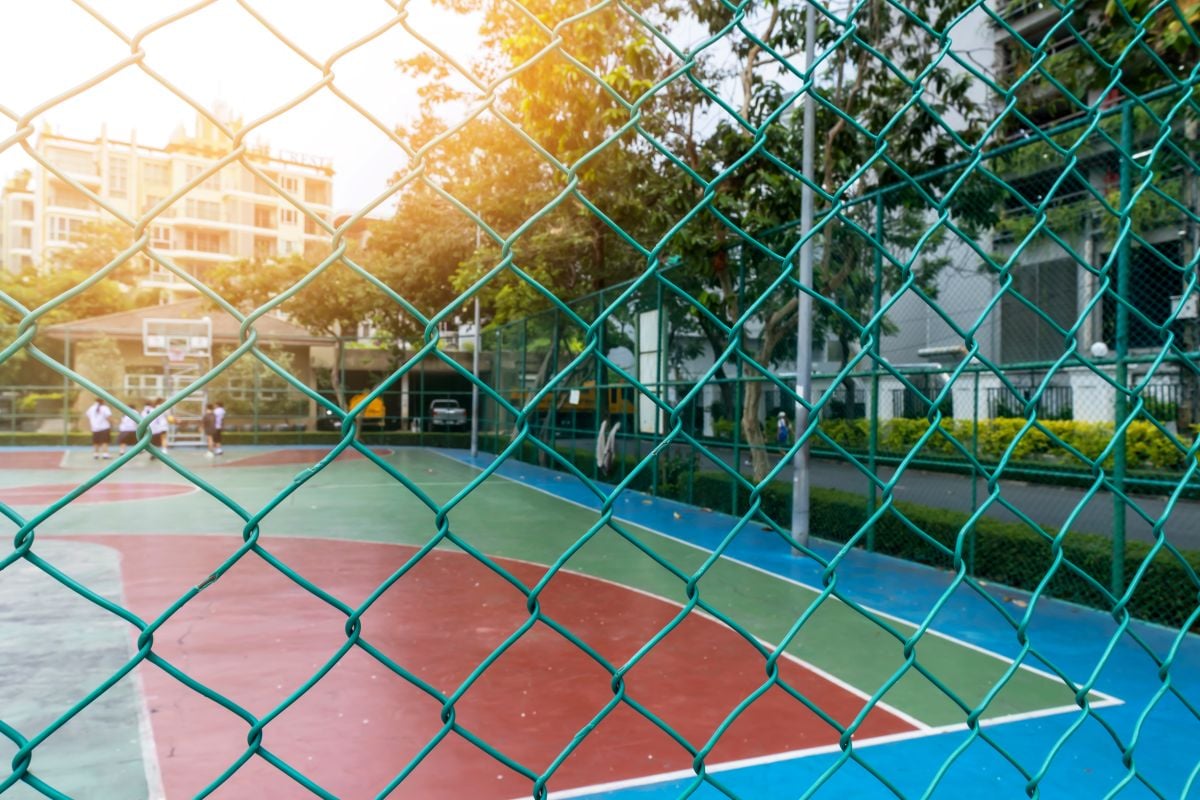
Chain link is the dominant material for school fencing, and it has earned that position for a reason. It’s durable, low maintenance, and provides the open visibility that staff need to monitor outdoor areas. For facilities managing a tight budget, it also holds up well over many years with minimal upkeep costs, which matters when public or tuition funds are on the line. The woven wire design allows clear sightlines from almost any angle, which means a teacher on playground duty can see across the full perimeter without having to move from one spot to another. For Nashua, NH and surrounding areas schools, chain link delivers a strong return on investment without sacrificing performance.
2. Privacy Slats for Sensitive Areas
Not every part of a campus needs the same level of openness. Chain link with privacy slats threaded vertically through the mesh is a practical upgrade for areas where visual screening matters, including locker room exits, special education outdoor spaces, or zones where younger students play. The slats reduce visibility from outside the fence without adding a full solid barrier, striking a balance between privacy and the kind of open design that still supports supervision from inside the campus.
3. Proper Height for the Application
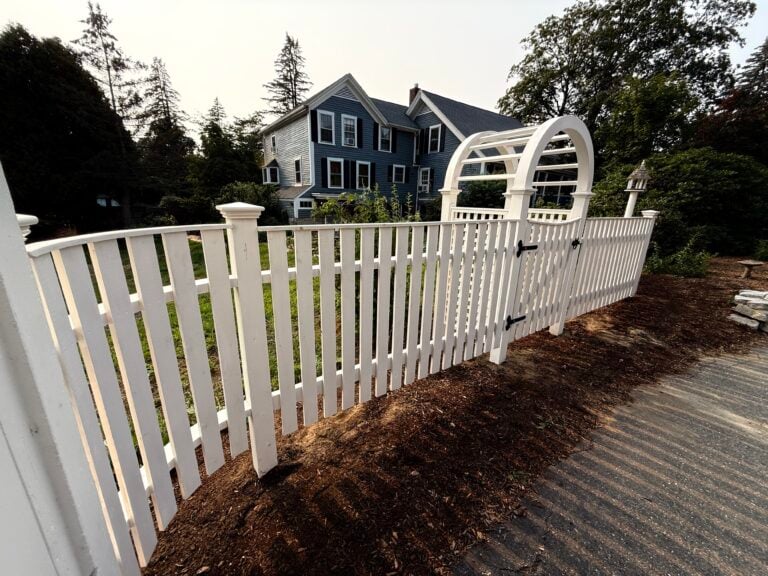
A four-foot fence works well around a preschool or daycare playground. A six-foot fence is more appropriate around a high school athletic field or a perimeter boundary shared with a public street. Independent and charter programs often have more flexibility in their fencing specifications, which can allow for design choices that balance security with curb appeal. Getting the height right for each specific campus zone matters more than applying a single standard across the whole property. Elementary schools, middle schools, high schools, and daycare facilities each have different needs, and a school fencing plan should reflect that.

4. Post and Rail Fencing Along Traffic Corridors
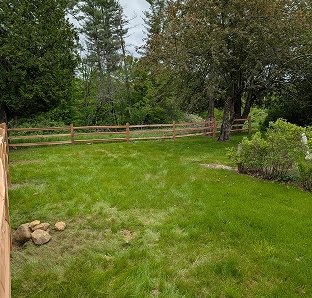
One of the most overlooked school fencing applications is the traffic circle and pickup line. Many elementary schools have a curved driveway right at the front entrance where parents pull through to drop off and pick up kids. Post and rail fencing along these corridors does something important: it channels both pedestrian and vehicle traffic in the right direction without creating a visual barrier that makes the entry feel closed off. It separates the walking path from the driving lane cleanly, which is one of the most practical ways to protect younger students during the most congested moments of the school day.
5. Controlled Access Points with Secure Gates
A perimeter fence is only as strong as its gates. Controlled access points with latching hardware, keyed or coded entry, and clear sightlines for staff monitoring are essential on any school campus. Gates should be positioned at designated entry points only, not wherever is convenient, so that all visitors are naturally funneled through supervised areas. For schools serving younger students, including preschool and daycare facilities, gates should feature childproof hardware that adults can operate quickly in an emergency but that children cannot manipulate on their own.
6. Anti-Climb Design Details
Standard chain link can be climbed, particularly by older students or individuals attempting to access the campus outside of school hours. Anti-climb design features include reducing or eliminating horizontal rails that provide footing, using smaller mesh openings that don’t offer a grip point, or specifying taller fence heights for high-risk perimeter sections. For schools with athletic fields adjacent to public areas, this is worth building into the original design rather than addressing after the fact.
7. Regular Inspection and Fast Repairs
A fence feature that often gets overlooked is simply the condition of the fence itself. Loose posts, broken rails, damaged mesh, and failing gate hardware all create gaps in a safety system that was designed to be continuous. The good news for school facilities directors is that fence repairs don’t require shutting down operations or waiting for a major project window. Crowe Fence fits repair work into tight scheduling gaps, including one or two-day jobs that can slot into a crew’s calendar between larger projects. Schools don’t need to have accumulated a long list of issues before calling; a single broken section or a gate that won’t latch properly is reason enough. And repairs aren’t limited to fences Crowe originally installed. If the fence is there and it needs fixing, we can handle it.
The combination of these seven features, properly specified and professionally installed, creates a school campus that functions safely and predictably every day students are on site.
Choosing the Right Material for Each Campus Zone
Different areas of a school campus have different priorities, and the fencing material that works best for the playground isn’t necessarily the right choice for the traffic corridor or the athletic perimeter. Thinking through the campus zone by zone leads to a more effective overall system.
Playgrounds
Playgrounds require fencing that keeps younger students contained while allowing adults to see in and out clearly. Chain link is the standard, and mesh specifications matter: ASTM International guidelines call for a mesh opening of no more than 1.25 inches between parallel sides for chain link playground fencing, specifically to prevent entrapment. Height of at least four feet is typical for elementary playgrounds, with gates positioned away from the primary exit points of the play area.
Athletic Fields and Perimeter Boundaries
Higher fence heights and anti-climb features are appropriate here. Six-foot chain link is common for athletic perimeters. Sections adjacent to streets or parking areas may warrant additional height or supplemental design features depending on the school’s security assessment.
Entry Corridors and Pickup Zones
Post and rail is well-suited here for its clean, directional look and its ability to guide traffic without creating a closed-in feeling. These areas are high-traffic and high-visibility, so the fence serves as much as a wayfinding tool as a safety barrier.

Daycare and Preschool Fencing: A Special Consideration
Privately operated daycares and preschools have their own fencing requirements, and there are a significant number of them in residential areas around Nashua, NH and surrounding areas, Manchester, and Milford. Their needs are more compact than a full school campus but no less specific.
Most licensing requirements for certified daycare facilities include:
- Minimum fence heights for outdoor play areas
- Self-latching gates that children cannot operate independently
- Full perimeter coverage of any area where kids play unsupervised
Getting these details right matters for child safety and for keeping the facility’s certification intact. Crowe Fence offers complimentary custom estimates so operators know exactly what a compliant installation looks like before committing to anything, and the same applies to repairs on existing fencing.
Summer is the ideal window for this work. Enrollment is lighter, access is easier, and disruption is minimal. If you’re planning an upgrade before the fall, now is the time to get a quote.
Protect Your Campus Before the School Year Starts
A school fence does its most important work quietly, every single day, and the best time to address gaps or upgrades is before students return in September. Crowe Fence serves elementary schools, high schools, preschools, and daycare facilities across Southern New Hampshire, and our full-time in-house crews handle every project without subcontractors. Request a free estimate by reaching out to our team directly. Contact us today and get your campus fencing squared away before the fall bell rings.

Discover Our Built-To-Last Fence Solutions
Start Your Project!
"*" indicates required fields