



Is Roof Snow Removal Necessary? 7 Warning Signs to Watch For
A pretty snowfall can turn into a real problem once it settles on your roof and refuses to leave. Wet snow, ice, and repeated freeze and thaw cycles add weight fast, and most homeowners don’t notice the strain until something cracks, leaks, or sags. Knowing when roof snow removal actually makes sense helps you protect your home without taking unnecessary chances. If your roof is already carrying a heavy load after a storm, it’s worth learning how to clear that buildup safely before it turns into an expensive repair.
What this guide covers:
- Why snow on your roof deserves attention
- 7 warning signs your roof is under too much stress
- How much snow a typical roof can handle
- When to rake it yourself and when to call for help
- How to protect your fence, deck, and railings from sliding snow
Why Roof Snow Deserves Your Attention This Winter
Most roofs can carry a normal winter’s worth of snow without complaint. Trouble starts when storms stack up, the snow turns wet and heavy, or meltwater refreezes along the edges. According to FEMA’s Snow Load Safety Guide, a single foot of fresh snow can weigh anywhere from about 3 pounds per square foot when it’s light and dry to roughly 21 pounds per square foot when it’s wet and dense. That difference is why the same 12 inches can be harmless one week and risky the next.
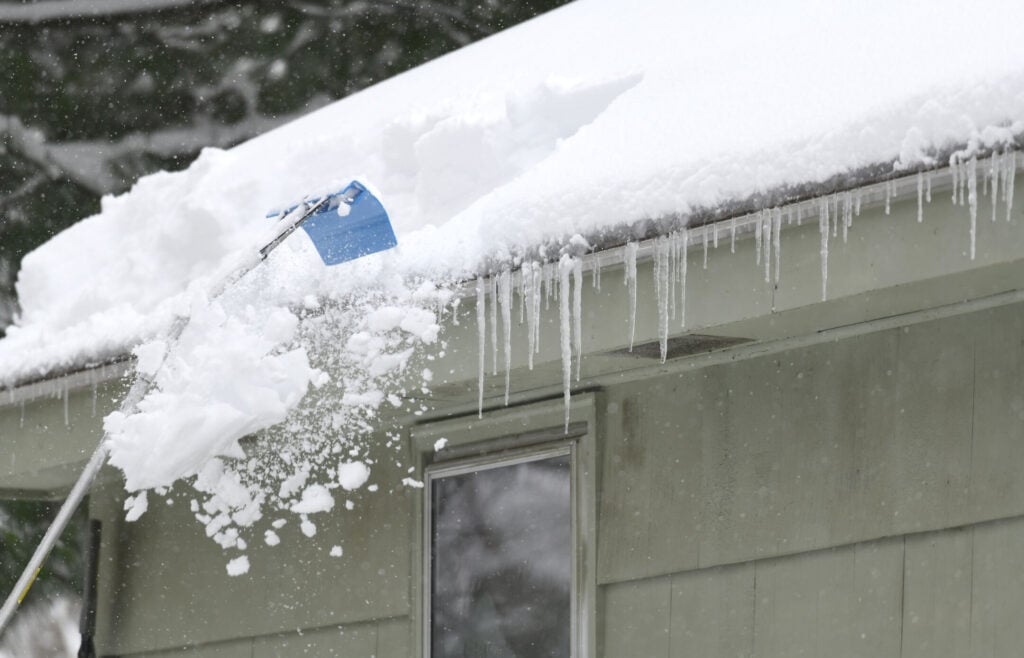
For homeowners in Hollis and surrounding areas, New Hampshire winters bring plenty of both. The safest way to stay ahead of buildup is usually from the ground with a long handled roof rake, but it helps to understand what you’re protecting first:
- Protects your roof structure: Reducing heavy snow accumulation takes structural stress off rafters, trusses, and the roof deck, especially on older homes.
- Prevents ice dams and leaks: Clearing the lower edge of the roof limits ice dam formation, which pushes water under shingles and causes interior damage.
- Keeps your family safer: Falling snow and ice can slide off without warning, often right onto walkways, entry steps, and driveways.
- Saves money on repairs: Regular snow removal helps extend the lifespan of your roof, and catching problems early prevents costly repairs to drywall, framing, and roofing material.
None of this means you need to panic every time it snows. It just means watching closely after big storms and knowing which signs call for action.
7 Warning Signs Your Roof Needs Snow Removal
Your house usually tells you when it’s carrying too much weight. FEMA lists several signs of overstress that can show up before a roof fails, and most are easy to spot.
1. Your Roofline or Ceiling Is Sagging
Step back and look at your roof from the street. A ridge that dips in the middle or an upstairs ceiling that bows inward is one of the clearest signs that the structure is struggling.
2. You Hear Creaking, Popping, or Cracking
Houses make noise in the cold, but loud creaks or pops from the attic during or after a heavy storm can mean framing members are bending under the load.
3. Interior Doors and Windows Suddenly Stick
If a bedroom door that closed easily last week now jams in its frame, the framing around it may be shifting. It’s a subtle sign that’s easy to blame on cold weather.
4. New Cracks Appear in Drywall or Plaster
Fresh cracks running from the corners of doors and windows, or where walls meet the ceiling, can signal that weight from above is moving the structure.
5. Water Stains or Leaks Show Up Inside
Brown spots on the ceiling, damp insulation, or drips near exterior walls usually point to melting snow finding its way in. Leaks often appear days after the storm.
- Inspect closets and corners along exterior walls
- Check the attic for wet insulation or frost on the sheathing
6. Ice Dams and Heavy Icicles Form Along the Eaves
A thick ridge of ice at the roof’s edge traps meltwater behind it, and that water has nowhere to go but under your shingles. Ice forming here usually starts with heat loss from the attic, which melts snow higher up so it refreezes at the colder eaves. Large icicles are often the first clue.
- Keep gutters and downspouts clear so ice buildup doesn’t block drainage
- Watch for ice accumulation over entryways and walkways
7. Snow Has Piled Up Deep or Drifted Unevenly
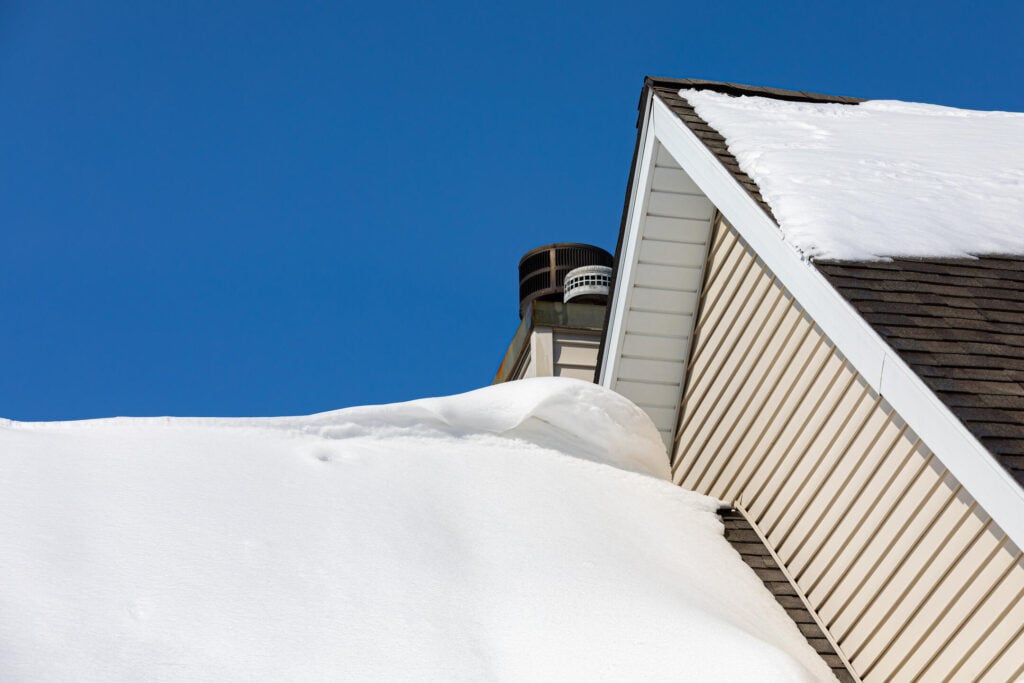
Wind can push snow piles into deep drifts on one side of a roof, behind chimneys, or where two rooflines meet. Those uneven loads stress certain sections more than others, even after a moderate snowfall.
If you notice one of these signs on its own, keep an eye on it. If you see two or more together, treat it as urgent and get the weight off the roof as soon as it’s safe.
How Much Snow Is Too Much for Your Roof?
There’s no single number that applies to every house. Roof size, pitch, age, framing, and snow depth all change the math. A steep pitched roof sheds snow more readily, while flat roofs and low slope sections hold onto it much longer. The Maine Emergency Management Agency shares estimates from the Insurance Institute for Business and Home Safety, which suggests a typical roof can handle about 20 pounds per square foot of added weight before it becomes stressed.
Here’s how different kinds of snow and ice measure up against that limit:
- Fresh snow: About 10 to 12 inches equals roughly 5 pounds per square foot, so a typical roof could hold up to about 4 feet before reaching its limit.
- Packed snow: Just 3 to 5 inches of older, settled snow weighs about the same 5 pounds per square foot, which means more than 2 feet can be too much.
- Ice: One inch of ice weighs about as much as a full foot of fresh snow, so even a thin layer adds up quickly.
- Mixed layers: Two feet of old snow under two feet of new snow could reach around 60 pounds per square foot.
Homes in Hollis and surrounding areas range from older farmhouses to newer colonials, and each handles weight differently. Many local building codes call for specific design snow loads, but an older roof or one with past damage may not meet today’s standards. Roof inspections before and after winter can help you catch weak spots early.
Raking It Yourself vs. Calling for Help
Not every snowy roof needs a professional, but not every roof is safe to tackle alone either. The right choice depends on your roof’s height, its pitch, and whether you’re already seeing warning signs.
| Factor | Raking From the Ground | Calling for Help |
| Best for | Light to moderate snow on single story homes | Tall homes, steep pitches, flat roofs, or heavy ice |
| Safety risk | Low when you stay off ladders | Lowest, since trained crews take on the risk |
| Equipment | Roof rake with an extendable handle | Safety harnesses, steam equipment, and the right tools |
| Warning signs present | Not recommended | Strongly recommended |
FEMA cautions that trying to remove snow from a roof can sometimes be more dangerous than leaving it, both for the person doing the work and for the roof itself. Improper removal causes as much trouble as the snow itself, so the right tools make all the difference:
- Skip metal tools: Sharp edges and metal shovels risk damaging shingles or puncturing a flat roof membrane. Professionals use a plastic shovel or snow pusher instead.
- Look up for power lines: Aluminum roof rakes conduct electricity, so a nonconductive model is the safer choice near service lines.
- Leave the snow blower in the garage: FEMA advises against using snow blowers on roofs because they can damage the surface.
- Go easy on stubborn ice: Rock salt and hot water can harm roofing and refreeze quickly. Deicing products like calcium chloride are gentler, and pros often use steam for thick ice dams.
If you do rake, work from the bottom edge up, pull snow down in thin layers, and don’t scrape the roof bare.
Don’t Forget What’s Below the Roofline
When snow slides off a roof, it often lands on your fence, deck railing, pergola, or mailbox. A sudden sheet of heavy snow can bend aluminum pickets, crack vinyl rails, or knock a gate out of alignment.
- Clear the landing zone of patio furniture, grills, and planters
- Avoid pulling snow onto deck railings or stair rails
- Watch fence sections that run close to the house
In Hollis and surrounding areas, we see winter take a toll on outdoor structures every year. If sliding snow damages your fence, railing, or mailbox, our team can repair it once the weather allows.
Frequently Asked Questions About Roof Snow Removal
Still weighing whether your roof needs attention this winter? These quick answers cover the questions homeowners ask most often.
Do I need to remove all the snow from my roof?
No. The goal is to reduce the weight and clear the lower edge to limit ice dams. Leaving a couple of inches behind protects your shingles.
How often should I clear snow off my roof?
There’s no set schedule. Pay closest attention after a major storm with wet, heavy snow, after several storms in a row, or when you notice any of the warning signs above.
Is it safe to climb on my roof to shovel snow?
It isn’t recommended. Icy surfaces make falls a real risk even with non slip footwear, and walking on a loaded roof shifts weight unevenly. Avoid climbing and call for professional help instead.
Can roof snow damage my fence or deck?
Yes. Snow sliding off a roof can bend pickets, crack rails, and shift gates. Keeping the landing zone clear helps prevent that damage.
What should I do if I notice warning signs?
Move people out of the affected area and avoid going up on the roof yourself. FEMA recommends having a structural engineer or qualified professional evaluate the building if signs of overstress appear.
A little attention after each heavy snowfall goes a long way. Once you know what to watch for, it’s much easier to decide when to act and when to let the sun do the work.
Keep Your Home Protected Through Every New Hampshire Winter
Heavy snow is part of life here, but roof damage doesn’t have to be. Watching for sagging, leaks, sticking doors, and ice dams helps you step in before a manageable problem becomes a costly one. At Crowe Fence, we’ve been helping homeowners in Hollis and surrounding areas protect their properties since 1984, and we’re happy to help you figure out the safest next step for your home. If winter is putting your roof, fence, or deck to the test, contact us today and let’s talk through it together.

Discover Our Built-To-Last Fence Solutions
Start Your Project!
"*" indicates required fields