


Composite Decking Colors: Popular Options and Design Tips
Color is one of the first decisions you make when planning a new deck, and it’s one you’ll live with for decades. When you choose composite decking colors, consider how they coordinate with your home’s exterior, roof, siding, and shutters, as well as your personal design preferences. Today’s variety of color families and innovative options goes far beyond the limited brown-or-gray choices of the past, giving Southern NH homeowners the flexibility to explore a wide range of shades and finishes. Whether you’re seeking inspiration for outdoor living designs or want to visualize how different colors will enhance your space, the right choice starts with seeing what’s actually available. Here’s a practical guide to what’s trending, what works in New Hampshire, and how to make the call confidently.
Here’s what you’ll find in this guide:
- The most popular composite decking color families right now
- How to choose a decking color family and coordinate it with your home’s exterior, including roof, siding, and shutters for a cohesive look
- How to match deck color to your home’s exterior and setting
- Why contrasting and picture-frame designs are gaining traction
- How New Hampshire’s climate and landscape should shape your choice
- Design tips for stairs, trim, and railing coordination
- Inspiration for outdoor living designs and color selection

Why Deck Color Is a Bigger Decision Than It Looks
Choosing a deck color is not the same as picking a throw pillow. This is a decision that shapes how your entire backyard looks and feels for 25 to 50 years, which is exactly how long a quality composite deck is built to last, sparing you the deck repair costs that come with aging wood. High-quality composite decking can offer warranties against fading and staining for 25 to 50 years, ensuring your investment maintains its vibrant life and appearance. The right color elevates your home’s exterior and makes the outdoor space feel intentional. The wrong one can date your home quickly or clash in ways that are expensive to undo.
Composite decking today is available in dozens of colors and multi-tonal board styles that closely mimic natural hardwood grain. The top trending deck colors lean toward natural, multi-tonal shades like rich browns and versatile coastal grays that complement most home exterior palettes. But trends are only part of the picture. The more important factors are your home’s exterior, your property’s setting, how you use the space, how the color holds up over time in a New Hampshire climate, and the low maintenance benefits that composite decking provides.
Here’s why color selection deserves real attention:
- Long-term commitment: Unlike paint on an interior wall, your deck color is not something you change on a whim. Getting it right the first time matters.
- Curb appeal and resale value: A deck that coordinates with your home’s exterior reads as a designed feature, not an afterthought. That distinction shows up in how your home photographs and how buyers perceive it.
- Comfort and heat: Darker colors absorb significantly more heat than lighter ones. On a south-facing deck in Brookline, NH and surrounding areas that gets full afternoon sun, that difference is real and affects how much you actually use the space in summer.
- Setting compatibility: Lakefront properties, wooded lots, and suburban backyards call for different palettes. Color that looks sharp in one context can feel out of place in another.
- Design cohesion: Your deck color interacts with your railing, siding, trim, and window frames. A coordinated approach produces a finished result that looks like it was designed, not assembled.
8 Popular Composite Decking Colors and What They Work Best For
The current composite decking market offers a wide variety of color families, including brown, grey, blonde, and red, allowing homeowners to select hues that best complement their outdoor spaces. Each color family brings specific design strengths and can be chosen to coordinate with your home’s exterior and landscape. Homeowners can select from these color families to achieve their desired look, whether they prefer to blend, contrast, or bridge their decking with secondary elements such as railings or trim. Here’s a breakdown of the most popular categories and where they tend to shine for homeowners in Southern New Hampshire.
1. Warm Browns and Natural Wood Tones
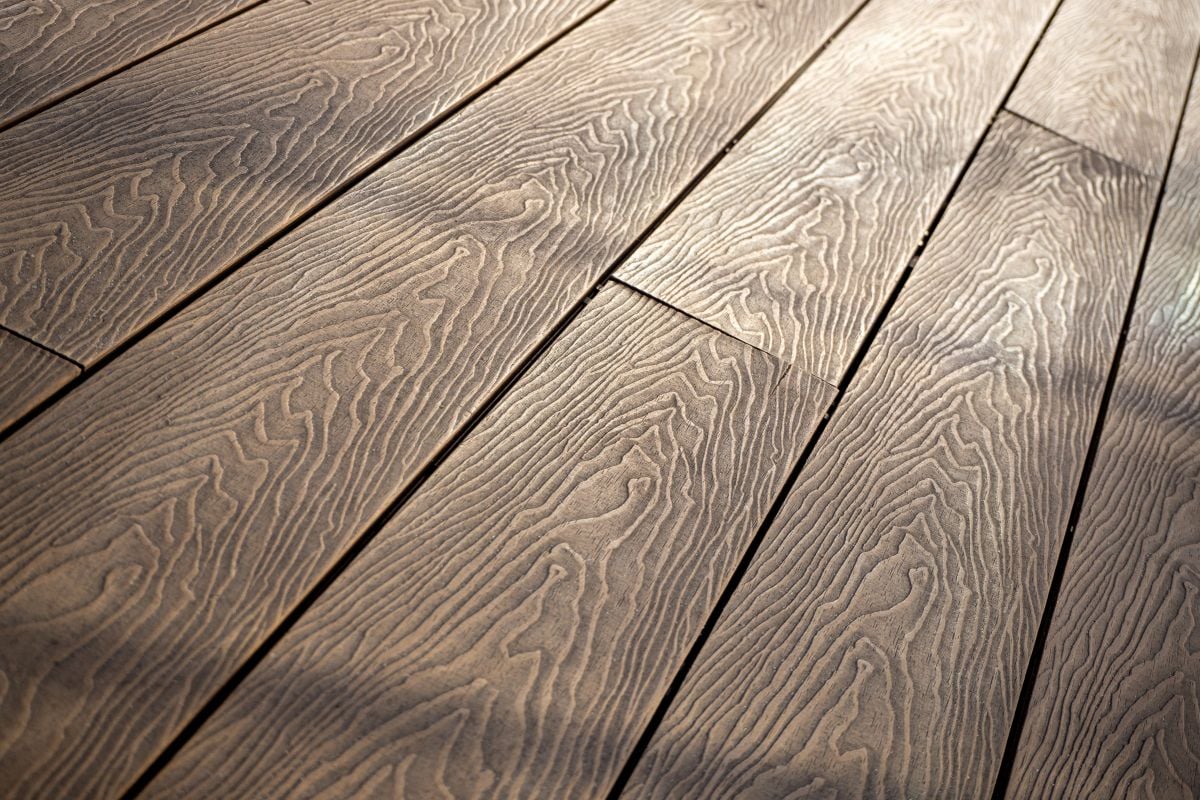
Rich walnut, teak, and spiced brown tones remain among the most requested composite decking colors because they deliver the visual warmth of natural wood without the maintenance. The rich brown hue is a deep, warm option that blends seamlessly with various home styles and color palettes. Teak composite decking often features a golden color that closely resembles traditional hardwood flooring, offering a luxurious and unique appearance. These boards typically feature multi-tonal grain patterns that add depth and character across a large deck surface. Warm earthy browns create a cozy environment and pair well with traditional home styles, making them a reliable choice for homeowners who want their deck to feel like a natural extension of a wooded lot or a traditional New England exterior.
They pair especially well with:
- Warm-toned siding like cedar shingles, tan, or khaki
- Bronze or copper railing accents
- Natural stone pavers or landscape borders
2. Coastal Gray and Silver Tones
Grey composite decking colors, as a color family, are especially popular for their versatility. Soft gray composite boards with slight silver or driftwood undertones are a natural fit for lakefront and waterfront settings. Modern grays lend a sleek, contemporary aesthetic, making them ideal for those seeking a more updated look. The palette reads as light and airy, complements both white trim and dark window frames, and holds up visually without competing with the natural surroundings.
In Brookline, NH and surrounding areas, homeowners on larger lots with natural pond or lake views frequently gravitate toward this palette because it keeps the deck from visually dominating the landscape. These tones also stay cooler underfoot than deeper colors on sun-exposed surfaces.
3. Deep Charcoal and Near-Black
This is one of the fastest-growing segments in residential decking, and it is easy to see why. Homeowners who have embraced the dark interior trend, black window trim, black hardware, and matte black fixtures, are naturally extending that aesthetic outside. A deep charcoal or near-black composite deck creates a dramatic, modern look that photographs beautifully and coordinates strongly with contemporary exterior designs.
A few practical notes for darker decks:
- Dark boards absorb more heat, so consider shade coverage or lighter railing and furniture to balance the surface temperature
- Charcoal and near-black work especially well when paired with a lighter contrasting trim board or picture-frame border
- These tones tend to show dust and pollen more visibly, so a periodic rinse matters more than it does with mid-tone boards
4. Cool Gray and Greige
Mid-range grays and greige tones, warm gray with beige undertones, sit in the sweet spot between classic and contemporary. From deep charcoal to almost-white light gray, all shades of gray are rising in popularity thanks to their ability to achieve clean, sophisticated designs that blend with any landscape. These colors pair with almost any siding palette, work on both traditional and modern homes, and age gracefully over time.
For homeowners who are uncertain about committing to a bold color direction, cool gray or greige is almost always a safe and attractive choice.

5. Sandy and Weathered Brown
Sandy, bleached, or weathered brown tones have strong appeal in New Hampshire properties that sit near water or have an older farmhouse character. These colors feel organic, relaxed, and unforced. They blend naturally into the kinds of landscapes common in Brookline, NH and surrounding areas, particularly properties with mature trees, stone walls, and mixed-shrub borders.
Sandy tones also reflect heat well, which makes them a practical option for exposed south-facing decks where surface comfort in summer is a priority.
6. Earthy Olive and Forest Tones
A smaller but growing segment, muted olive greens and forest-toned composite boards appeal to homeowners who want their deck to genuinely recede into a wooded setting rather than stand out from it. These tones are especially relevant on properties where the deck is surrounded by trees or natural plantings.
This color category pairs naturally with:
- Dark brown or black railing systems
- Stone or flagstone patio connections
- Properties with extensive native plantings or naturalized landscapes
7. Multi-Tonal and Variegated Boards
Many of today’s premium composite lines feature boards with significant color variation built into the surface, shifting between two or three tones across the width and length of each board. These multi-tonal boards often include subtle hints of complementary or contrasting shades, replicating the color variations found in natural hardwood and elevating the overall palette of large or multi-level spaces. This gives the deck a rich, complex character that a single flat color cannot match.
Multi-tonal boards are particularly effective on larger decks where a flat color can start to look monotonous across a wide expanse. The built-in variation, with its nuanced hints of color, adds visual interest without requiring additional design effort.
8. Bold and Statement Colors
A smaller but notable trend involves composite boards in non-traditional colors, including deep navy, forest green, and near-black with cool blue undertones. These special statement colors are most commonly found on contemporary homes where the deck is designed to function as a design feature rather than a background element. Certain shades, such as Ash White, are ideal for seamlessly extending indoor living space into the garden, creating a harmonious transition between indoors and outdoors.
The Contrasting Color Trend: Picture Frames, Borders, and Stairs
One of the most popular design moves happening in composite decking right now is the use of contrasting colors within a single deck. Rather than choosing one color and building the entire surface in that tone, homeowners are using a second color as a picture-frame border around the perimeter, creating a visual frame that defines the shape and adds real depth to the overall design. Selecting the right composite decking product is essential for achieving these contrasting color designs, as different products offer unique color options and finishes to suit your vision.
The same concept extends to stairs. Using a contrasting board color on stair treads, or running a contrasting trim piece along the stair risers, adds a finished, custom look that elevates the entire project significantly. It is a detail that reads as thoughtful and intentional, even when the footprint of the deck itself is simple.
This approach works particularly well when:
- The field color is dark and the border is light: A charcoal deck with a light gray picture frame reads as clean and architectural.
- The field color is warm and the border is a cool neutral: Warm brown field boards with a cool gray border add contrast without competing.
- The trim matches the home’s window or door trim: Connecting the deck border color to an existing exterior detail pulls the whole design together.
This is not a passing trend. Dual-tone and picture-frame deck designs have been building momentum for several years and reflect a broader shift toward treating the deck as a designed outdoor room rather than just a platform.
Matching Deck Color to Your Specific New Hampshire Setting
New Hampshire properties come in a wide range of settings, and each one responds differently to deck color choices. Here is how to think about color selection based on where you actually live.
Lakefront and Waterfront Properties
Light, airy palettes work naturally here. Coastal grays, sandy weathered tones, and soft silver boards keep the deck feeling open and connected to the water. Heavy, dark colors can feel visually weighty in an environment that otherwise reads as light and natural. If you want a darker element, reserve it for the railing or border trim rather than the field boards, or keep sightlines to the water fully open with a glass deck railing.
Wooded and Rural Lots
Deep wooded lots in towns like Brookline, NH and surrounding areas respond well to earth tones, warm browns, and forest greens that allow the deck to feel like it belongs to the landscape rather than being dropped into it. Multi-tonal boards that carry some natural color variation help further with this naturalized effect.
Suburban Properties with Contemporary Homes
Modern exteriors with dark trim, black windows, and clean lines are a natural home for charcoal, near-black, or cool gray composite boards. The picture-frame border detail in a contrasting lighter tone is particularly well suited to these properties and creates a deck that looks like it was part of the original design.
Traditional New England Homes
Warm browns, weathered grays, and multi-tonal natural wood tones complement cedar-shingled, clapboard, and colonial-style homes without fighting for attention. Classic white or black railing systems pair cleanly with almost any color in this category.

One Last Thing Before You Commit: See the Samples in Person
Color samples on a screen and color samples in real light on your actual property are very different things. Composite decking boards shift in appearance depending on the time of day, the orientation of your deck, and the surrounding landscape. A board that looks like a medium warm gray on a computer screen may read much cooler or warmer once it’s placed next to your siding in afternoon light.
At our Amherst showroom, you can assess the craftsmanship and composite decking colors firsthand before making a decision. We’ll happily send you home with samples of your favorites, and contact our representatives for any we don’t have available that day.
Build a Deck Color You’ll Love for Decades
Composite decking gives Southern NH homeowners more design freedom than any previous generation of outdoor building material. Brands like MoistureShield bring a wide range of color lines, including Vision, Meridian, Elevate, and Vantage, backed by structural warranties up to 50 years and fade and stain warranties that ensure lasting color performance. MoistureShield’s CoolDeck technology, available on select lines, keeps boards significantly cooler than competing composite and PVC products, which matters on a south-facing deck through a New Hampshire summer. With 95% recycled content across their product lines, these materials also support a more sustainable outdoor build.
Crowe Fence & Deck has been helping homeowners across Southern New Hampshire design and install composite decks for over 40 years. Our full-time in-house crews handle every project with no subcontractors, and our Amherst showroom is where the design conversation starts. We are proud to be the 2025 Fencing Contractor of the Year as recognized by the Greater Merrimack Souhegan Chamber.
Contact us today to get a free quote and start the conversation about what color and design is right for your property.

Discover Our Built-To-Last Fence Solutions
Start Your Project!
"*" indicates required fields