


8 Reasons To Choose Cedar Fencing For Your Outdoor Space
When homeowners start thinking seriously about a new fence, they often land on cedar before they’ve even looked at the alternatives. That instinct is usually right. Cedar fencing offers a combination of natural beauty, durability, and versatility that other wood species simply don’t match, especially in a climate like Southern New Hampshire’s where the weather tests every material hard. Whether you’re putting up a privacy fence, a decorative picket, or a post and rail along your property line, the choice of wood makes a real difference in how the finished project looks and how long it lasts. If you’re ready to start planning, our team can help you explore your wood fence options and get a free quote.
What you’ll learn in this post:
- Why cedar is a standout choice for New Hampshire homeowners
- 8 specific reasons cedar outperforms other wood fencing options
- How to care for a cedar fence and what maintenance actually looks like
- How cedar compares to pressure-treated pine and vinyl
- What to expect from a professionally installed cedar fence in terms of cost and lifespan

Cedar Is Not Just a Good-Looking Fence
There’s a tendency to think of cedar as primarily a visual choice, the warm honey-brown tones, the clean grain, the way it looks freshly installed against a green lawn. Those things are real, and they matter. But what makes cedar genuinely worth the investment is what you can’t see: the natural oils running through the wood that protect it from the inside out.
Cedar contains compounds called thujaplicins, which are naturally occurring oils that resist moisture, fungi, and insects without any chemical treatment. This is why a cedar fence doesn’t require the same pressure treatment that pine does to survive outdoors. For homeowners with kids, pets, or garden beds running along the fence line, that distinction is meaningful. No chemicals leaching into the soil, no treated lumber concerns, just a fence that handles the outdoors on its own terms.
Here is why that matters for Merrimack, NH and surrounding areas homeowners:
- No chemical dependency: Cedar’s natural oils provide rot and insect resistance without pressure treatment, making it a healthier choice for yards where children and pets spend time.
- Dimensional stability: Cedar resists warping, cupping, and splitting better than most wood species, which matters through New Hampshire’s freeze-thaw cycles.
- Genuine longevity: A well-maintained cedar fence lasts 15 to 30 years. That’s a long time to get value from a single installation.
- Natural aesthetic: The warm amber tones and straight grain pattern give cedar an immediate visual appeal that pressure-treated pine and vinyl both try to replicate, and neither fully achieves.
The combination of built-in protection and visual quality is what separates cedar from the alternatives, and it’s why the same wood has been used in outdoor fencing for generations.
8 Reasons To Choose Cedar Fencing
Each of these reasons stands on its own, but together they make a strong case for why cedar remains the most popular wood fencing choice for homeowners who want quality and character in the same installation.
1. Natural Resistance to Rot and Decay
Cedar’s thujaplicin oils give it an inherent resistance to rot, decay, and fungal growth that no other common fence wood matches naturally. Where pressure-treated pine needs chemical infusion to achieve similar protection, cedar comes that way from the mill. For the best outdoor performance, Western Red Cedar is the recommended species: its natural oil content is higher than other varieties, giving it superior moisture resistance in a climate like New Hampshire’s. One installation note: cedar posts set directly in damp soil are the most vulnerable point in any cedar fence. Above-ground panels perform better over time, and proper post installation with drainage consideration is where long-term lifespan is won or lost.
2. Built-In Insect Repellent
The same natural oils that resist moisture also deter wood-boring insects including termites, carpenter ants, and other pests that attack wood. Cedar doesn’t just withstand insect activity passively; the scent and chemistry of the wood actively discourage nesting and damage. For homeowners in Merrimack, NH and surrounding areas with wooded lot lines or organic garden beds adjacent to the fence, this is a meaningful practical advantage.
3. Exceptional Dimensional Stability
Cedar is lighter than most hardwoods, which reduces stress on posts and hardware, but it holds its shape well despite that lighter weight. It doesn’t shrink, swell, or warp as dramatically as other wood species when humidity and temperature fluctuate. In a climate with four distinct seasons, that stability keeps boards fitting correctly, pickets staying straight, and the overall fence looking intentional rather than tired after a few years.
4. A Lifespan That Justifies the Investment
A professionally installed cedar fence typically lasts 15 to 25 years with standard maintenance, and can reach 30 to 40 years with consistent staining, sealing, and proactive upkeep. That upper range isn’t common, but it’s achievable when the fence is installed correctly and cared for regularly. The upfront cost of cedar runs higher than pressure-treated pine, typically in the range of $25 to $45 per linear foot installed in the Northeast, but the longer lifespan and lower maintenance demands bring the total cost of ownership closer than the initial price difference suggests.

5. Natural Beauty That Ages Well
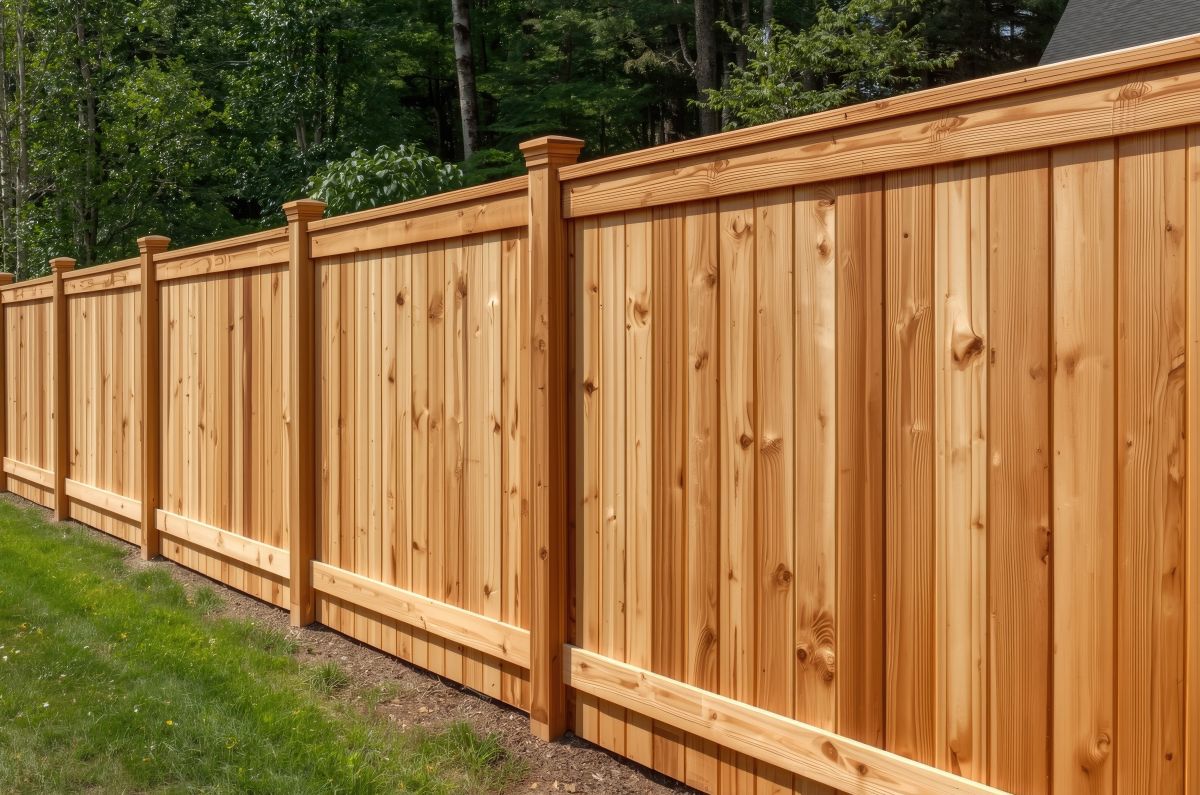
New cedar fencing comes in warm honey and amber tones that complement almost any home exterior. Left untreated, cedar gradually weathers to a soft silver-gray patina that many homeowners actually prefer over the original color. It reads as natural, intentional, and understated. If you want to preserve the warm original tones, a UV-protective stain applied every two to three years keeps the color vibrant and the wood protected at the same time. Either way, cedar looks better with age than most fencing materials.
6. Customization Across Styles and Heights
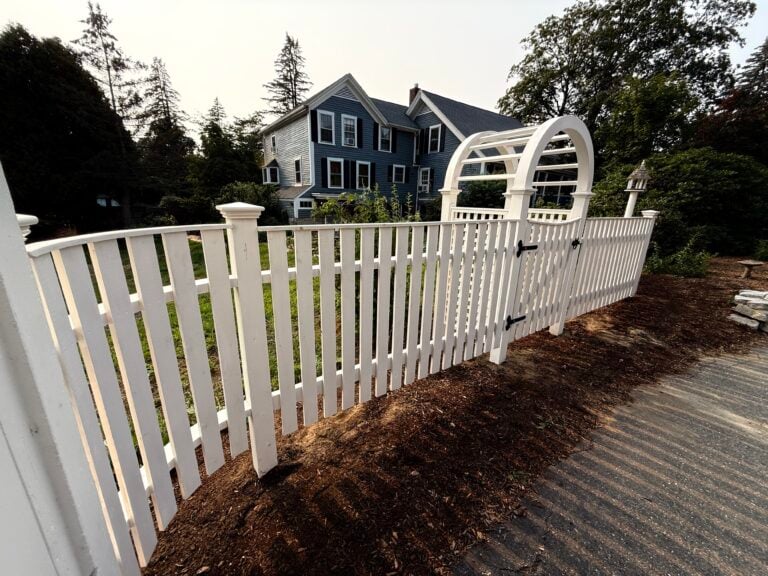
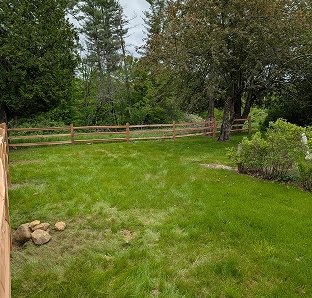
Cedar works in virtually every residential fence style: privacy, semi-private, picket, lattice, post and rail, and board-on-board. It’s available in a wide range of lumber dimensions and surface textures, from smooth-finished boards to rough-sawn faces, which allows the fence to be tailored precisely to a homeowner’s preferences and the surrounding landscape. It cuts cleanly, holds fasteners well, and takes stain or paint evenly, which means a cedar fence can be finished to match almost any home aesthetic. This flexibility is part of why cedar shows up on everything from colonial capes in older neighborhoods to contemporary new builds throughout Southern New Hampshire.
7. No Harmful Chemicals in Your Yard
Pressure-treated pine uses chemical preservatives to resist rot and insects. Those treatments have improved significantly over the years, but the concern about chemical exposure near gardens, play areas, and pet runs is legitimate. Cedar achieves the same protection naturally. Beyond the chemical-free angle, cedar is also a renewable and biodegradable material, which gives it a clear environmental advantage over synthetic fencing options like vinyl. For homeowners who want a fence that’s safe for their yard today and responsible from a sustainability standpoint over the long term, cedar checks both boxes.
8. Strong Curb Appeal and Property Value
A cedar fence makes a visible impression. The natural material reads as quality from the street in a way that chain link and most vinyl options don’t, and it can meaningfully improve a home’s curb appeal. Fencing that enhances both the appearance and the security of a property is recognized by real estate professionals as a value-add, particularly in markets like Merrimack, NH and surrounding areas where outdoor living spaces carry real appeal for buyers.
Cedar’s curb appeal and longevity make it one of the few fence investments that pays dividends in daily enjoyment and long-term home value simultaneously.
How to Care for a Cedar Fence in New Hampshire
Cedar is often described as low-maintenance, and compared to pressure-treated pine that’s accurate. But low-maintenance is not the same as no-maintenance, and understanding what cedar actually needs keeps the fence looking and performing well throughout its lifespan.
- Annual cleaning: Once a year, clean the fence with water and mild soap to remove mildew, dirt, and surface staining. Avoid high-pressure washing: it damages cedar wood fibers and opens the grain to moisture intrusion, doing more harm than a gentle scrub. A soft brush or low-pressure rinse handles the job without the risk.
- Staining or sealing every two to three years: This is the most important maintenance step. A quality UV-protective stain repels moisture, blocks sun damage, and keeps the natural color from fading to gray if you want to preserve it. Keep the fence away from areas with standing water, and keep vegetation trimmed back from the fence line: plants and ground cover trap moisture against the wood, which accelerates rot even in cedar.
- Annual inspection: Walk the fence line each year and check for loose boards, failing fasteners, damaged posts, or sections showing early signs of moisture intrusion at the base. Catching small issues early prevents them from becoming structural problems. If a single board cracks or a rail breaks, cedar repairs are straightforward: individual boards can be replaced without pulling out an entire section.
The good news for homeowners in Merrimack, NH and surrounding areas is that New Hampshire’s cooler, drier summers are actually gentler on cedar than the humidity and UV intensity of southern climates. A well-maintained cedar fence here can reach the higher end of its expected lifespan.

Cedar vs. Other Common Fence Materials
Understanding how cedar stacks up against the alternatives helps homeowners make a confident decision rather than one based on upfront price alone.
Cedar vs. Pressure-Treated Pine
Pine is the lower-cost alternative and the most common wood fence material nationally. It requires chemical treatment to resist rot and insects, needs staining more frequently than cedar, and typically lasts 10 to 15 years compared to cedar’s 15 to 30. For a homeowner focused on the lowest initial price, pine is the answer. For a homeowner focused on natural material, longer life, and less frequent maintenance, cedar wins on almost every measure.
Cedar vs. Vinyl
Vinyl costs less to maintain over time and lasts 25 to 30-plus years without staining or sealing. The tradeoff is aesthetic: vinyl looks like vinyl. It doesn’t have the grain, texture, or warmth of real wood, and it can’t be stained a different color if tastes change. Cedar costs more in maintenance but offers a natural, customizable appearance that many homeowners value above the convenience of a fully synthetic material.
Cedar vs. Aluminum
Aluminum is a strong low-maintenance option for decorative and perimeter fencing, but it doesn’t provide the privacy or the warmth of a wood fence. Cedar is the clear choice when the goal is a traditional wood privacy fence or a picket-style front yard fence where appearance and enclosure both matter.
Ready To Add Cedar to Your Property?
Cedar fencing is one of the most satisfying investments a homeowner can make in their outdoor space. It looks right immediately, improves with age, and holds up through New Hampshire winters without demanding constant attention. Crowe Fence installs cedar fencing across Southern NH, bringing 40 years of craftsmanship to every project with full-time in-house crews and no subcontractors. Contact us today to get your free quote and find out what a cedar fence would look like on your property.

Discover Our Built-To-Last Fence Solutions
Start Your Project!
"*" indicates required fields