


Fence and Gate Repairs: 7 Signs You Shouldn’t Ignore
Your fence does a lot of quiet work. It keeps the dog in the yard, gives you privacy on the back patio, and marks where your property ends. Because it’s always there, it’s easy to stop noticing it until something goes wrong. Staying ahead of fence and gate repairs is the simplest way to protect the time and money you put into a well built fence that frames your yard. A leaning post or a sticky latch rarely fixes itself, and small problems have a way of turning into big ones.
In this post, you’ll find:
- Why small fence issues are worth fixing early
- Seven warning signs that your fence or gate needs attention
- How New Hampshire seasons wear fences down
- How to decide between a repair and a replacement
Why Small Fence Problems Turn Into Big Ones
A fence works as a system. Posts hold up rails, rails hold up panels or pickets, and the gate depends on everything staying straight and square. When one piece shifts, it puts extra stress on the parts around it, and the damage spreads faster than most homeowners expect.
Here’s what you protect when you deal with problems early:
- Your pets and kids stay put: A loose board or a new gap under the fence is all it takes for a determined dog to go exploring the neighborhood.
- Your privacy and security stay intact: Missing boards, leaning sections, and gates that won’t latch leave your yard more exposed than you’d like.
- Your repair bill stays smaller: National cost data puts the average fence repair at roughly $600, while replacing an entire fence costs many times that. Catching damage early keeps you on the low end of that range and protects your budget.
- Your home looks cared for: A straight, solid fence adds to your curb appeal, and a good quality fence can add to your property value too. A sagging one does the opposite.
We see it all the time with homeowners in Milford and surrounding areas. A quick spring fix becomes a bigger project by fall when it’s left alone.
7 Warning Signs Your Fence or Gate Needs Repair
After 40+ years of building and fixing fences across Southern New Hampshire, we know which warning signs matter most. Here’s what to look for the next time you walk your fence line in Milford and surrounding areas.
1. Posts That Lean, Wobble, or Lift
Posts are the backbone of your fence. If one leans, rocks when you push on it, or sits higher than its neighbors, the whole section is at risk. In New Hampshire, the usual culprit is frost heave, which happens when wet soil freezes, expands, and pushes posts up or out of line. High winds can also work posts loose over time, and water pooling around the base speeds up rot in wood posts, so good drainage matters.
2. A Gate That Sags or Drags
A gate that scrapes the ground, needs a lift to close, or has started to droop at the latch side is telling you something. Sagging usually comes from worn hinges, loose hardware, or a hinge post that has started to lean.
3. Latches and Hinges That Stick or Won’t Catch
Hardware takes a beating from daily use and New England weather. Rusty hinges stiffen, latches stop catching, and springs lose tension. If your gate won’t stay closed, your pets and your privacy aren’t protected. Lubricating hinges and latches once a year keeps them moving smoothly and helps prevent rust. When hardware is too far gone, replacing it is often one of the quickest and most affordable repairs we make.
4. Soft, Rotting, or Split Wood
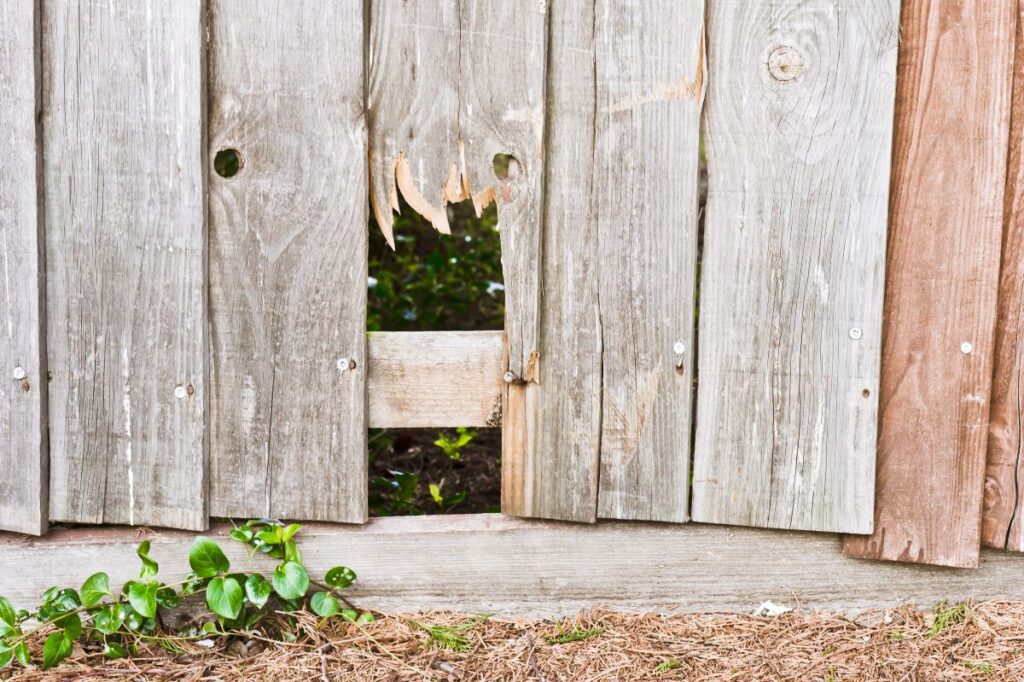
Wood fences bring natural beauty to a yard, but moisture and insects are their biggest enemies. Press a screwdriver into boards and posts near the ground. If it sinks in easily, rot has set in. Split boards, peeling stain, and dark staining at the base are also signs that the wood needs attention. A fresh coat of stain or waterproof sealant every two to three years is a common rule of thumb for protecting the finish.
5. Cracked, Warped, or Loose Vinyl Panels
Vinyl holds up well to our winters, but it isn’t indestructible. A falling limb, a snowblower that gets too close, or a hard hit from a ball can crack panels or pop rails out of their posts.
6. Rust, Bent Pickets, or Sagging Chain Link
Chain link fencing is affordable and needs very little upkeep, and aluminum is tough, but metal fences still show wear. Regular cleaning helps remove rust spots before they spread. Watch for bent aluminum pickets, rust spots on hardware or galvanized chain link, and fabric that has started to sag between posts.
7. New Gaps Under or Between Sections
Soil settles, heavy rain washes out low spots, and dogs dig. Over time, the space under your fence can grow wide enough for a pet to slip through. If you have a dog who treats your fence as a suggestion, this is the sign to take most seriously.
If you notice more than one of these at once, don’t worry. Fence problems tend to travel together, and a single heaved post can cause a sagging gate, a misaligned latch, and a new gap all at the same time.
How New Hampshire Weather Wears Down Fences and Gates
Our four seasons are part of what makes living here great, but they’re hard on outdoor structures. Knowing what each season does to your fence helps you spot trouble in Milford and surrounding areas before it gets expensive.
Winter
Freeze and thaw cycles are the biggest threat. Frost heave lifts posts, heavy snow loads stress panels, and plows or snowblowers can knock sections out of line near driveways and walkways.
Spring
Spring is when winter damage shows up. As the ground thaws and dries out, take a slow walk along the fence and look for leaning posts, cracked panels, and gates that suddenly won’t close the way they did in the fall.
Summer
Sun, heat, and humidity dry out wood and fade stain. Summer storms bring falling limbs and high winds that test loose panels and weak hardware. Trimming back shrubs and vines along the fence lets air flow and helps wood dry out after rain.
Fall
Fall is a great time to get repairs done. The weather is mild, the ground isn’t frozen yet, and fixing problems now means your fence goes into winter strong instead of getting worse under the snow.
Inspect your fence at least twice a year, ideally in spring and fall. On large properties, walk the line in sections so nothing gets missed. Make a note of anything that looks off and snap a photo, which makes it easier for us to give you a clear answer when we come out.
Repair or Replace? How We Help You Decide
Not every fence problem means you need a new fence. Wood, vinyl, chain link, and ornamental aluminum fences can all be repaired, and if the posts on your existing fence are solid and the damage is limited, a repair usually makes more sense and saves you money. We’ll always tell you what we’d do if it were our own yard.
| What You’re Seeing | Repair Usually Makes Sense | Replacement May Be Smarter |
| Leaning posts | One or two posts shifted over a single winter | Many posts are leaning or rotting at the base |
| Gate problems | Hinges or latch are worn, but the gate frame is straight | The gate frame is bent, rotted, or badly out of square |
| Damaged boards or panels | A few sections took a hit from a storm or limb | Damage runs along much of the fence line |
| Rot or rust | Damage is limited to a few boards or pieces of hardware | Rot or corrosion has spread into posts and rails |
| Overall condition | The fence still fits your needs and style | You’ve been patching the same problems year after year |
When you call us for repair services, here’s what you can expect:
- A free estimate: We’ll come out, look at what’s going on, and explain your options in plain language.
- An honest recommendation: If a targeted repair will do the job, we’ll say so. No pressure and no upsell.
- Our own crews: Our full time crews handle the work, never subcontractors, so you know exactly who’s showing up.
If replacement turns out to be the better choice, our team handles fence installation and gate installation too, and we’ll help you choose the right type of fence for your yard and budget. We schedule repairs during regular business hours, Monday through Friday. We also repair decks and mailboxes, so if your mailbox post took a hit from the plow, we can take care of that on the same visit.
Frequently Asked Questions About Fence and Gate Repairs
Homeowners ask us plenty of questions before booking a repair. Here are quick answers to the ones we hear most often.
How Much Do Fence and Gate Repairs Cost?
The cost depends on the type of fence you have, how much damage there is, and what parts need replacing. Small hardware fixes cost far less than replacing posts or full sections, and we provide free estimates so you know the price before any work starts.
Can a Sagging Gate Be Fixed Without Replacing It?
Absolutely, in most cases. Most sagging gates need new hinges, tightened hardware, or a straightened hinge post rather than a brand new gate.
Can a Leaning Fence Post Be Saved?
Sometimes. If the post itself is sound, it can often be reset. If it’s rotted or cracked at the base, replacing that single post is usually the better fix.
Do You Offer Emergency Fence Repairs?
We handle repairs on a scheduled basis during regular business hours rather than offering 24/7 emergency service. Give us a call and we’ll get you on the schedule as soon as we can.
Is Financing Available for Repairs?
Yes. Financing through Acorn is available on our invoices, which can help if a repair turns into a bigger project.
Still have questions about your fence or gate? We’re always happy to talk it through over the phone or at our Amherst showroom.
Your Fence Deserves More Than a Quick Patch
A fence only does its job when every post, panel, hinge, and latch is doing its part. Catching problems early keeps your pets safe, your yard private, and your repair costs down, and it extends the life of your fence. Waiting usually means a bigger bill later.
As a local fence company, Crowe Fence has been building and repairing fences for homeowners in Milford and surrounding areas since 1984. We take pride in giving you a straight answer about whether a repair or a replacement makes more sense. If you’ve spotted any of these warning signs, contact us today to schedule your free estimate.

Discover Our Built-To-Last Fence Solutions
Start Your Project!
"*" indicates required fields